Get Full Government Meeting Transcripts, Videos, & Alerts Forever!
Get email alerts on the Special Education topic
No spam. Unsubscribe anytime.
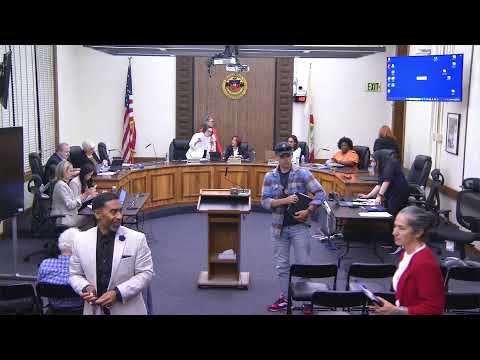
Parents and advisory committee urge Pasadena Unified to expand inclusion, set IEP transition age at 14 and formalize safety plans
Summary
An advisory committee and parents presented a set of special-education recommendations calling for a districtwide inclusion improvement plan, inclusive playgrounds, transition planning to begin at age 14 and individualized emergency plans for students with disabilities. District staff said they will return with implementation timelines.
The Pasadena Unified advisory committee delivered a detailed set of recommendations asking the district to accelerate inclusive practices for students with disabilities, prioritize accessible playgrounds and formalize transition and safety planning.
Schneider, introduced as head of the advisory committee, told the board the committee's priorities include an inclusion improvement plan, audits to identify barriers, and targeted professional development to support staff. "Our goal is inclusion across grades, not only placement," Schneider said, urging a multi-phase approach of identification, retreat-style stakeholder sessions and use of available state and federal funds to support implementation.
Committee member Holly outlined five concrete requests: (1) a comprehensive inclusion improvement plan; (2) prioritization of inclusive playgrounds and playground designs beyond mere ADA compliance; (3) transition IEPs to begin at age 14 to align with Assembly Bill 438; (4) an explicit toileting policy for students who need assistance; and (5) individualized safety and emergency plans for students with disabilities.
"Accesible does not mean inclusive," Holly said, urging design standards that include transfer stations, ramps, appropriate swings and shade. The committee argued earlier transition planning helps families weigh diploma options and connect students to employment programs such as WorkAbility.
Parents who spoke during public comment backed the recommendations with personal accounts. Laura Arias described how an inclusive TK/K classroom benefited her child's social skills and confidence. "Inclusion made my son feel he belonged," she said.
Board members acknowledged the committee's work and pressed staff for specifics. Dr. VelE1zquez (district staff) said the district will convene special-education leadership and return to the board with recommendations and a suggested timetable once the school year resumes. "We will follow up with the director of special education and come back with a plan for implementation," she said.
What happens next: District staff committed to meet with the committee and to bring more-detailed implementation proposals and timelines to the board, including how recommended facility improvements would be integrated into current modernization work.
Note: Quotes and attributions come from the advisory committee presentation and parent testimony recorded in the meeting transcript.