Get Full Government Meeting Transcripts, Videos, & Alerts Forever!
Get email alerts on the Special Education topic
No spam. Unsubscribe anytime.
Pasadena Unified CAC urges inclusion summit, age‑14 transition IEPs and district toileting policy
Summary
The district—s Community Advisory Committee outlined five priorities for special education this week: a comprehensive inclusion improvement plan, inclusive facilities and playgrounds, requiring age‑14 transition IEPs, a district toileting policy, and individualized student safety plans in IEPs.
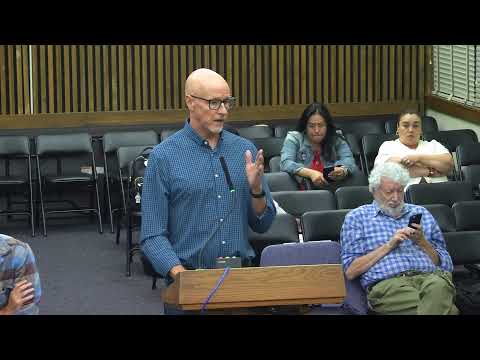
Adria Schneider, chair of Pasadena Unified—s Community Advisory Committee, presented the committee—s annual recommendations and urged the board to adopt a package of five priorities to expand inclusion and student safety across the district. "Our first step would be the inclusion summit that we proposed last year," Schneider told trustees, listing a comprehensive inclusion improvement plan, inclusive facilities and playground prioritization, age‑14 transition IEPs, a district toileting policy, and individualized student safety plans in IEPs as the committee's top items.
The CAC framed the recommendations as practical, evidence‑based steps to reverse the district—s declining least‑restrictive environment (LRE) indicators for K–12 students. Schneider cited state policy movement — including bills aimed at inclusive playground design — and a recent spike in special‑education funding at the state level, saying the district could use earmarked SIP grant money and the new funds to support earlier transition planning and inclusive practices.
Board members pressed staff on timelines and implementation. Trustee Holly said she welcomed a summit and asked how recent federal and state guidance on accessibility might affect local planning. Dr. Blanco and district special‑education leadership responded they plan to convene implementation work with CAC representatives when the new school year begins, and that some program changes are already woven into the district—s program review and SIP planning. The district said it would report back with timelines for policy work such as the toileting protocol and how the facilities team might adopt inclusive playground elements in upcoming modernization projects.
The CAC also asked the board to require age‑14 transition IEPs instead of the state—s current default of starting transition planning at 16, arguing earlier planning helps students and families choose appropriate diploma pathways and prepare for adult services. "We're recommending PUSD waive this exemption and require transition service IEPs be held at age 14 or during the students' first year of high school," Schneider said.
Trustees and staff agreed on the importance of clearer timelines and promised to return with next steps. Dr. Blanco said many of the CAC—s suggestions align with work already underway in special education and that staff would look to incorporate the committee—s items into the district—s implementation plan, providing progress reports once the new school year begins.
Officials said the district would evaluate available grant and state funds before finalizing which positions or pilot projects would be funded in 2026–27. The CAC said it will remain available to help lead community engagement around an inclusion summit and the rollout of any new policies.