Get Full Government Meeting Transcripts, Videos, & Alerts Forever!
Get email alerts on the Caregiver Survey topic
No spam. Unsubscribe anytime.
Caregiver Action Network survey: caregivers spend hours on coordination, many are already using AI
Summary
A Caregiver Action Network survey of 272 validated respondents found caregivers spend substantial time on care coordination (37% spending 11+ hours weekly), rely heavily on smartphones and patient portals, and report 59% have used AI for caregiving tasks. CAN and a National Council on Aging expert framed these findings amid national workforce shortfalls.
A survey presented by the Caregiver Action Network (CAN) on the ACL webinar found caregivers shoulder a heavy administrative load and are already using technology — including AI — to fill gaps.
Tal Shechtman (CAN) said the organization validated 272 survey responses from an outreach list of about 30,000–40,000. The survey showed that 37% of caregivers spent 11 or more hours per week on care coordination tasks such as scheduling, managing medications, paperwork and calling providers — time that caregivers described as largely invisible to the formal health system. "That coordinating aspect in many ways is invisible," Shechtman said, noting these activities are rarely reimbursed.
Technology use is widespread: 72% of respondents said they use smartphone apps, 68% use online patient portals and over 40% use telehealth or remote monitoring; only about 10% reported using no technology. CAN reported 59% of respondents had already used AI in caregiving activities and 53% used AI regularly; top use cases included understanding a diagnosis, preparing questions for doctor visits, organizing medical forms and managing bills.
CAN also identified barriers: cost, uncertainty about whom to trust, privacy and security concerns, and the time required to learn new tools. Tal Shechtman said caregivers want tools that reduce, not add, workload: "An app that was hard to understand... would be more of a homework assignment than something that's going to help them."
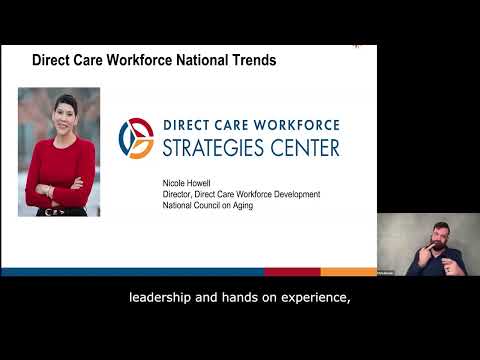
ACL‑partnered experts also placed the survey in workforce context. Nicole Howell of the National Council on Aging's Direct Care Workforce Resource Strategy Center summarized workforce scale and pressure: she cited roughly 5 million direct care workers nationally, with about 3.2 million working in home and community‑based services, and urged centering worker and care‑recipient voices when designing AI tools.
CAN will publish a public version of the full survey results and a debrief from ACL. Webinar speakers encouraged applicants to consult posted materials and the Slack workspace for further details.