Get Full Government Meeting Transcripts, Videos, & Alerts Forever!
Get email alerts on the Public Safety topic
No spam. Unsubscribe anytime.
Richmond police officer resigns; board approves stipend plan for call screening when officers are off duty
Summary
Officer Blake Allen resigned and returned to his prior department, leaving Richmond with one officer and a chief; the Select Board approved a stipend program so officers can take 12-hour on-call screening shifts (paid a 1.5-hour equivalent stipend per shift) to vet Vermont State Police mutual-aid requests when Richmond officers are unavailable.
The Richmond Select Board heard an announcement that an officer had resigned and approved a new pay plan to compensate officers who screen calls for the Vermont State Police when no Richmond officer is on duty.
Town manager Josh announced that Officer Blake Allen had resigned and decided to return to the Shelburn Police Department, leaving Richmond with one officer and a chief while recruitment continues. "Blake Allen has resigned from the Richmond Police Department," Josh said, adding that the chief is continuing recruitment efforts.
To reduce reliance on a single chief to screen incoming mutual-aid calls from the Vermont State Police, Chief Cohen proposed a formal on-call stipend program. Under the plan Chief Cohen explained in public session, officers could take 12-hour call-screening shifts while off-duty (available by cell) and receive a stipend equal to 1.5 times one hour of their regular hourly pay per shift; that stipend covers an initial screening hour and addresses the low frequency of calls during a shift. "I set this up to be able to do 12-hour shifts, which basically would be a stipen per shift...they would be paid a total of 1.5 times their regular hourly pay for a shift up to 12 hours," Chief Cohen said when explaining the mechanics.
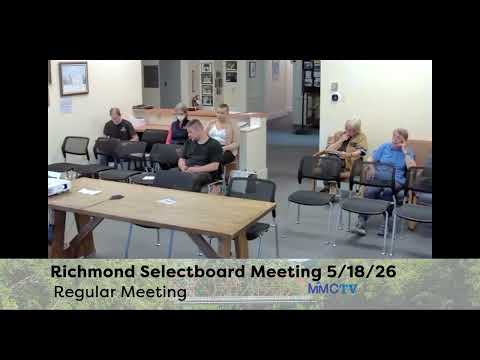
Selectboard member Kaitlin moved to approve the plan and the board unanimously approved the stipend arrangement. The motion record shows all members voting in favor.
Why it matters: The stipend formalizes delegation of call-screening duties to officers when Richmond is not staffed, ensures continuity of mutual-aid requests to Vermont State Police, and reduces the on-call burden on the chief. The board noted the program does not increase base pay but reallocates compensation for existing duties in a way that allows coverage when staffing gaps exist.
Next steps: The chief will implement the on-call rotation and report back if the frequency of calls or compensation needs adjustment.