Get Full Government Meeting Transcripts, Videos, & Alerts Forever!
Get email alerts on the Stormwater Drainage topic
No spam. Unsubscribe anytime.
Residents urge Abilene to fix repeated NW 17th Street flooding; city staff to study drainage
Summary
Several NW 17th Street residents told the Abilene City Commission their yards and foundations are repeatedly flooded; Public Works said the area may be undersized for current runoff and staff will consider a drainage study and engineering review.
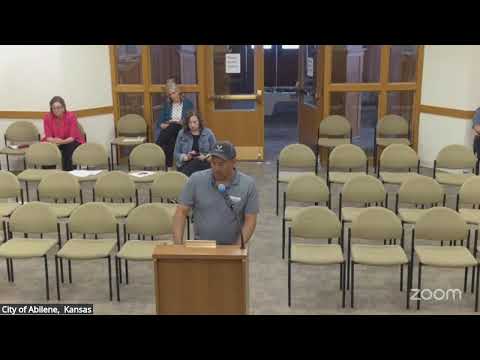
Several neighbors described repeated, damaging flooding near NW 17th Street during the Abilene City Commission's June 22 meeting, telling commissioners the problem has persisted for years and has worsened this spring.
"I spent $45,000 to get my house jacked up a couple years ago because it settled," resident Gary Boyd said, asking the commission for help after storms filled his yard and sent water through his property. Boyd said water flows from Buckeye and other upstream areas into the neighborhood, bubbles up through manholes and has blown manhole covers off in the past.
Neighbor Andy Hess said the runoff forms a "raging river" that has come close to both houses on the block. "It truly is. It's a raging river," Hess said, urging the city to look at diversion options. Another neighbor, Jeff Heindman, said he has seen the street flood at least twice in the last month and described water two feet deep blocking vehicles.
Public Works Director Brad Anderson told the commission the flow originates in higher commercial areas and follows storm lines through several inlets before reaching the low point near the 17th Street homes. Anderson said older infrastructure and expanded asphalt surfaces in the watershed likely increase runoff and that some segments of pipe may be undersized for current flows. "We'll just need to decide if we want to look into a new drainage study in certain areas of town," Anderson said.
Commissioners asked for follow-up: staff confirmed it has maps of the drainage infrastructure and can count and inspect inlets and manholes. Residents said they have video evidence of the flooding they will share with staff. Several speakers asked the commission to send engineers to evaluate permanent fixes, including regrading, resizing pipe or, as Boyd suggested, buying and removing a particularly vulnerable house if necessary to reroute sewer lines.
The commission did not commit to a specific capital project at the meeting. Instead, members and staff agreed to investigate further, count and inspect inlets, and consider commissioning a drainage study to determine whether upgrades or targeted capital work are needed.