Get Full Government Meeting Transcripts, Videos, & Alerts Forever!
Get email alerts on the Local Budget topic
No spam. Unsubscribe anytime.
Russell County supervisors scramble after state funding changes lift school obligations and force budget trade-offs
Summary
New state numbers delivered June 24 raised the county—s required local match for school programs and widened a gap supervisors must close before finalizing the FY2026–27 budget; options discussed included rescinding bonuses, delaying raises, adjusting tipping fees and closing some trash convenience sites.
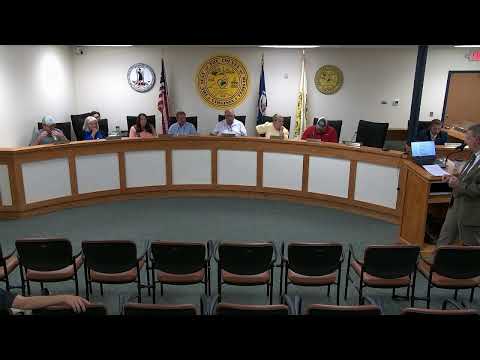
Russell County—s Board of Supervisors spent more than two hours on June 24 weighing how to close a newly revealed shortfall after the state revised school- and employee-related figures under HB 30 and SB 30.
County administrator Alonzo told the board the administration reconciled late-arriving state and federal numbers that morning and that the county—s FY2026–27 expenditures total $35,130,893. He said the legislature—s compromise left regular state and locality employees with a 3.5% increase in the state calculation while teachers in the state—s formula show a 4% adjustment.
"We had to roll the numbers today," Alonzo said, explaining staff adjusted wages, FICA and VRS entries for the new raises and recalculated health-care projections. He said that after reconciling revenue streams the county showed a roughly $151,000 surplus but cautioned that the figures arrived very recently and could change.
The immediate consequence was a mismatch between what the school division said it needs and what the county can commit. Brooke, speaking for the school division, told supervisors that if the locality does not fund the required local effort and local match the division would forfeit about $4.2 million in state program funds; she said the county—s portion to avoid losing those state dollars was roughly $1.2 million to $1.4 million.
"If we choose not to participate, we would lose their $4.2 million in funding," Brooke said, listing programs that would be affected, including Pre-K 3 and 4 slots, at-risk funding and primary class-size reduction that fund teachers and early-reading interventions.
Board members and staff discussed multiple ways to close the gap: rescinding or delaying one-time bonuses and raises, increasing tipping fees to generate more revenue, reallocating the modest surplus, and targeted cuts. Alonzo said eliminating the locality—s share of raises and having the school division accept the same pause on raises could move the county closer to balance.
"I could pull the raises and probably end up in the 800,000 range," Alonzo said in a discussion of combined adjustments, acknowledging it would be painful and require cooperation between the county and the school board.
Treasurer Mr. Leister provided finance detail during the meeting, reporting collected revenue totals and a projected ending fund balance based on the morning—s snapshot; he warned that some receipts are restricted and cannot be used for general obligations.
Rather than adopt a final budget that night, supervisors voted to reconvene at 6:00 p.m. on Monday, June 29 to finish technical reconciliation and talk through specific program and personnel trade-offs. In the meantime, the board directed staff to prepare draft ordinance language on proposed tipping fees and to publish notice of any budget amendment that would exceed the statutory 1% threshold for changes requiring a public hearing.
The reconvened meeting will need to balance preserving personnel and state-funded school programs against the legal and fiscal constraints on the county's budget. "We have flexibility here, but do it right," Alonzo said, urging public notice and planning time before closing or consolidating convenience sites or finalizing other operational changes.
Next steps: staff will circulate the updated tipping-fee analysis, finalize numbers on the sale of county property that could fund a one-time bonus if approved, and present revised budget options to the board at the reconvened meeting.
(Reporting note: the board repeatedly used voice votes; specific roll-call tallies for final budget votes were not recorded in the transcript.)