Get Full Government Meeting Transcripts, Videos, & Alerts Forever!
Get email alerts on the Free Speech topic
No spam. Unsubscribe anytime.
Neighbors clash over political signs; council says First Amendment limits enforcement
Summary
Residents of Nancy Drive and an advocate debated dozens of political yard signs during public comment. Township staff told council most political signage is protected by recent First Amendment precedent, limiting the township’s ability to remove signs; council urged residents to seek private resolution.
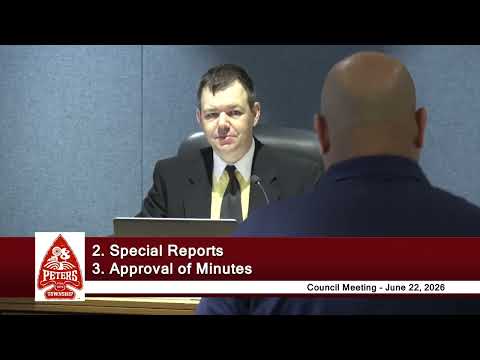
Tensions over a cluster of yard signs on Nancy Drive drew a lengthy public discussion at the Peters Township Council meeting on June 22.
Ryan Connelly, who addressed council about enforcement of the township’s sign code, walked members through relevant sections of Chapter 440, citing permit, size and placement provisions and noting that many of the signs on Nancy Drive appear to violate local dimensional and attachment rules. Connelly urged consistent enforcement of the code.
Several neighbors described the signs as intimidating and retaliatory. One resident said signs were erected in apparent retaliation for his earlier complaint and argued that large, nailed‑to‑tree signs facing neighbors were hurting deliveries and making children uncomfortable. Mary Hay (a Nancy Drive resident) said an earlier hanging sign reading “Hang Biden” had remained in place for months and that the neighborhood felt intimidated. Carol Ortenzio told council canvass responses indicating neighbors were afraid to post signs because of intimidation at that address.
Township staff and council members repeatedly cautioned that post‑Gilbert Supreme Court jurisprudence and subsequent lower‑court interpretations give heightened protection to political speech, which limits municipal enforcement options. Staff noted some objective violations (for example, required setbacks and rules that prohibit attaching signs to trees) that the township can enforce in a content‑neutral manner, but warned that selective enforcement of political signs risks litigation. Council said that where signs cross into unprotected categories (fighting words, imminent threats) they would consider enforcement, but generally the township’s enforcement authority is constrained with purely political messages.
No enforcement action or ordinance change was taken. Council members suggested neighbors attempt private resolution (mutual removal or time‑limited display) and directed staff to review whether time‑place‑manner approaches or uniform, content‑neutral standards could be applied consistently.
Why it matters: The exchange highlights how federal free‑speech precedent constrains local sign codes and leaves many disputes to private negotiation or to narrowly defined, content‑neutral public‑safety rules.