Get Full Government Meeting Transcripts, Videos, & Alerts Forever!
Get email alerts on the Transportation Safety topic
No spam. Unsubscribe anytime.
DOT pauses four‑way stop at Route 16 in Chocorua after public outcry; residents press for crosswalk beacons
Summary
State DOT told Tamworth officials it will pause a planned four‑way stop at the Route 16/113 intersection and fold the location into a broader Route 16 corridor study; residents urged immediate pedestrian protections and debated who should pay for rapid flashing beacons and crosswalk signage.
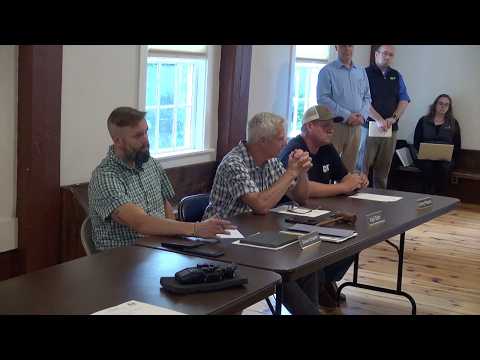
At a public listening session convened by the Tamworth Select Board, State Department of Transportation officials said they will not immediately install a four‑way (all‑way) stop at the Route 16/113 intersection in Chocorua (often called Chicago Village) and instead will include the junction in an upcoming Route 16 corridor study.
“Further review and conversation with the senator and concerned parties and internally … there is a corridor study in the works,” said Corey Stellings, the DOT project manager in the agency’s safety section, describing DOT’s decision to pause the project while the broader study (covering Route 16 and nearby routes) proceeds. Stellings said DOT recognizes the safety benefits of an all‑way stop but wants to evaluate “regional impacts” such as traffic diversion and seasonal peak volumes before acting.
DOT Commissioner David Rodrigue told attendees that the agency wants more time to examine options and engage stakeholders. “What we’re asking everybody to do is let us hit the pause button, work through this corridor study, and look at all the options,” Rodrigue said, adding that the outcome could range from no change to pedestrian enhancements or a future intersection control project that includes a four‑way stop.
The announcement prompted strong public reaction. Becky Riley Shakara, who said she lives in the village, urged the town and DOT to restore a crosswalk and signage immediately: “I’ve been almost hit several times,” she said. Several other residents described repeated summer backups and near‑misses; one speaker who described August traffic counts said the corridor saw peak daily volumes up to 10,500 vehicles during summer weekends.
Speakers pressed both DOT and the Select Board for immediate mitigation rather than waiting for a long study. “Doing nothing today, especially with no crosswalks there anymore — half crosswalks — is just waiting for more accidents,” said Alex Woodbury, who urged reinstallation of flashing beacons, a pedestrian refuge island, or a sensor‑triggered traffic signal as possible alternatives.
Board members said reinstallation of rapid flashing beacons would likely require town funding. The board explained it had been advised that maintaining painted crosswalks without functioning beacons could increase municipal liability. Residents estimated the cost of rapid flashing beacons in the range of $30,000–$50,000; DOT staff said the state does not pay for those beacons and that pedestrian improvements and the associated liability often fall to municipalities while the roadway remains state property.
Senator McGonagle, who spoke at the meeting, supported a comprehensive corridor review rather than a single‑site solution. He cited prior Route 16 corridor work and said the upcoming study would allow stakeholders on both sides to weigh in on appropriate remedies.
The Select Board did not commit funds that night but said it would place the issue back on a future agenda to explore options such as funding a single crosswalk from reserves or seeking grants. DOT said it will engage stakeholders during the corridor study and report back; the agency also committed to look for possible grant opportunities and to share those with the town.