Get Full Government Meeting Transcripts, Videos, & Alerts Forever!
Get email alerts on the Labor Relations topic
No spam. Unsubscribe anytime.
Fredonia teachers’ union raises grievances and warns schedule changes could harm high-need elementary students
Summary
The Fredonia Teaching Association told the school board it filed two grievances in June — one over incomplete teacher evaluations and another over delayed tentative assignments — and criticized a proposed elementary schedule that union leaders say eliminates chorus and library and reduces planning time for special-area teachers.
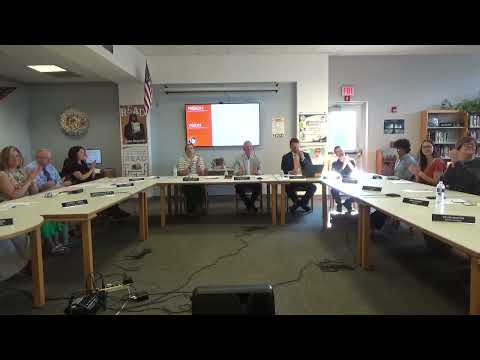
Michelle Braino, president of the Fredonia Teaching Association, told the district’s Board of Education during the second public-comment session that the union filed two grievances in June and urged the board to involve teachers more fully in schedule planning.
"The FTA has filed 2 new grievances in June," Braino said, adding that one grievance concerns 10 teachers who were not fully evaluated under the district’s negotiated APPR agreement and the other involves tentative teaching assignments that contractually were due June 15. "We cannot trust that our contract language will be upheld in all ways, large and small."
Braino described how a draft elementary schedule first circulated to small groups on June 1 was presented unevenly to different audiences and said teachers learned of major changes — including the elimination of Chorus and Library, as she understood it — informally. "This presentation does not sound like the opening of a conversation," she said, arguing that the rollout felt directive rather than collaborative.
She urged the board to respect contract language about teacher involvement and said the changes would disproportionately affect students with greater needs: "50 percent of our students live in poverty. Over 50 of our elementary kids are unhoused," Braino said, warning that rushing into specials early in the school day could mean chronically late students "will never attend a full class that special because they arrive late every day."
An elementary art teacher, Kimberly Appleby, echoed those concerns in a later public comment. Appleby described 16 years teaching elementary art in the district and said the proposed schedule — increasing classes per day and shortening transition time from 5 minutes to 3 minutes — would make it practically impossible to run material-heavy lessons, maintain hall displays and continue an art club that met before school. "Our new schedule is not what's best for our students or our teachers," Appleby said. "I feel this schedule will create burnout for us all."
Superintendent Dr. Zilliox acknowledged public comment and said the administration has been working to adjust schedules and address concerns this week. The board did not take immediate action on the specific schedule changes during the meeting; several speakers said some tentative assignments had been corrected and some final APPR observations had occurred.
The board invited members of the public to submit written comments to the district office and to the board by email for consideration.
What happens next: parents, teachers and other stakeholders who want their concerns recorded were told to submit written statements to the board; the board will continue to receive input as the administration finalizes plans ahead of the next school year.