Get Full Government Meeting Transcripts, Videos, & Alerts Forever!
Get email alerts on the Student Assessment And Intervention topic
No spam. Unsubscribe anytime.
District data show uneven gains; board endorses summer inquiry and targeted after‑school interventions
Summary
San Readian School District staff presented multiple assessment measures showing modest districtwide change, notable school‑level variation and subgroup gains; the board endorsed summer inquiry work and a pivot from broad Saturday programs to targeted after‑school interventions to close gaps.
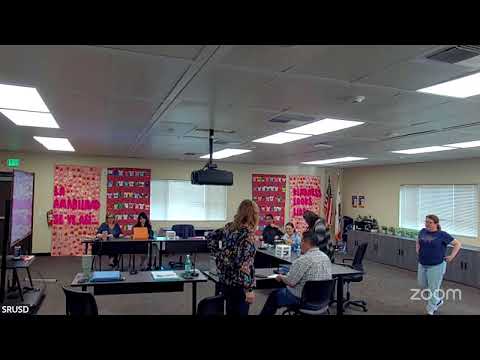
San Readian School District staff presented a multi‑measure review of student assessment data at the board workshop on June 23, saying the district shows modest net movement but not the proficiency levels it seeks and that school‑level results vary widely.
Becky, a district staff member who led the presentation, said the district examined six assessments — I‑Ready, CASP (state ELA and math), MC Class, LPAC/ELPAC, CAST (science) and a distance‑from‑standard measure — and found that districtwide ELA dipped slightly while math rose a little, leaving the district projected in the “orange” band on the accountability dashboard for the year. “Putting all of those together gives us a fuller picture of where our students are progressing,” Becky said.
Why it matters: the review drove the board and staff toward a set of next steps rather than a single judgment. Staff proposed a summer leadership inquiry with principals and the district data analyst to identify “bright spots” at individual school sites and to translate growth into proficiency through targeted instructional actions coming this fall.
Key findings and follow‑up work - Student movement: Becky reported that about 9 percent more students moved into the “mid or above” band in ELA and nearly 13 percent moved out of the two‑or‑more grade levels below band; in math, roughly 10.6 percent more students reached mid or above and 15.5 percent moved out of the deepest deficit band. Staff called those within‑year movements encouraging but said they fall short of overall proficiency. - Subgroup gains: English learners, socioeconomically disadvantaged students and students with disabilities showed relatively strong within‑year growth; staff emphasized these as targeted successes to replicate elsewhere. - School‑level variance: some sites — notably John Gutierrez (JG) and New Republic — posted different strengths. JG was described as the district’s strongest performer in ELA by CASP but showed weaker I‑Ready growth this year, a discrepancy staff flagged for summer inquiry. New Republic showed a puzzling year‑to‑year dip despite strong multi‑year growth and had several long‑term teacher leaves, which staff said likely contributed.
Assessment validity questions Board members pressed staff about the reliability and alignment of interim assessments. “Historically I‑Ready and CASP correlated above 80 percent, but this year they don’t align as well,” a board member said; Becky said staff will investigate whether differences stem from student engagement with the interim I‑Ready instrument, changes in implementation fidelity, or other factors. The board asked that the summer inquiry analyze correlations and potential causes.
Programmatic response: targeted interventions Staff described a tactical shift for the coming year away from broadly open Saturday programs toward more targeted after‑school intervention blocks, intersession offerings (spring/winter/fall breaks) and teacher‑led small groups designed to match students’ schedules and increase attendance of those who most need services. Becky said about 75 percent of district students already participate in after‑school programming and that funding changes may require more strategic prioritization; the district plans to use I‑Ready diagnostic detail to select students for focused support.
Special education distribution and staffing The district plans to move one SDC (special day class) from New Republic to Santa Rita Union Elementary next year and later move an SDC from McKinnon to La Hoya as facility space allows, with the intent of distributing intensive special education programming more evenly rather than concentrating it at just two elementary sites. Staff also highlighted that long‑term teacher leaves at New Republic likely affected that school’s year; personnel disruptions will be part of the site inquiries.
Next steps and timeline Board members agreed that principals and the data analyst will conduct the planned summer inquiries to identify specific instructional leverage points and to create student‑level grouping for fall; staff said they will avoid launching new initiatives this year and instead scale proven practices through PLC+ work and instructional coaching. The district will report back with findings and proposed actions at future meetings.
Where this stands: the board did not take formal policy votes on these items at the workshop. It moved the regular board meeting for June 24 and requested staff follow up with the analysis and proposed interventions.
Quotes “Putting all of those together gives us a fuller picture of where our students are progressing,” Becky said, summarizing the multi‑measure approach. Board member Sarah Turner said she wanted the inquiry to determine why growth “is being lost” between some elementary feeders and a middle school that follows them. “If the growth is there and it’s not continuing, we want to know why,” she said.
What to watch for The summer leadership inquiry analysis and any proposed changes to intervention schedules or program allocations (including the planned SDC moves) are the next substantive deliverables staff will present to the board.