Get Full Government Meeting Transcripts, Videos, & Alerts Forever!
Get email alerts on the Book Event topic
No spam. Unsubscribe anytime.
Jane Aikin discusses new history of the Library of Congress, scholars highlight archival roots
Summary
At a Library of Congress "Made at the Library" event, author Jane Aikin discussed her new book, drawn from research in the Manuscript Division's LC Archives; Library of Congress Historian Emeritus John Cole praised the work and the session included a question on the library's historical role in U.S. copyright deposit.
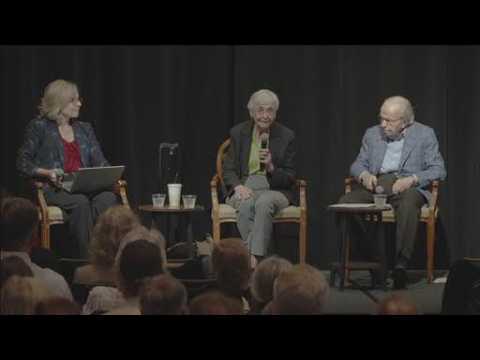
Jane Aikin, author of The Library of Congress: From Jefferson's Vision to the Digital Age (Georgetown University Press, 2025), discussed her research and sources at a Library of Congress “Made at the Library” event moderated by Cheryl Fox, curator of collections in the Manuscript Division. Library of Congress Historian Emeritus John Cole joined the conversation and both speakers pointed to the Manuscript Division’s LC Archives as central to their work.
Aikin said the Publishing Office and the John W. Kluge Center provided crucial editorial and research support during her time as a scholar in residence. “The support from the publishing office was wonderful,” she said, describing how the office helped shepherd chapters to prospective presses and provided workspace and research access. She said the book draws on hearings, committee prints and other primary sources to offer a narrative history that covers the library from its founding through 2015.
Cole, who has documented LC history across several books and projects, said the library’s dual role as a legislative and a national library is a persistent theme in its development. He praised Aikin’s notes and organization and encouraged readers to consult the book as a reference on contemporary library history. Cole recalled archival discoveries about Ainsworth Spofford and other figures who helped shape the institution. “Spofford ... single mindedly then convince[d] Congress to bring copyright back to LC, which was essential,” Cole said, describing the 19th‑century shift that centralized U.S. copyright deposits at the Library of Congress.
Speakers also discussed the Library’s use of private donations and boards to build collections and facilities. Aikin and Fox described the creation of the Library of Congress Trust Fund Board during Herbert Putnam’s librarianship and cited Elizabeth Sprague Coolidge’s gift that funded the Coolidge Auditorium (reported at $60,000 at the time). Cole and Aikin recounted the Encyclopedia of the Library of Congress project (2004) and the value of division‑level histories and oral histories for preserving staff memory. Cole noted recent efforts, supported by the Publishing Office and by Mark Sweeney, to fund interviews of retiring staff so those recollections can be preserved in the Manuscript Division.
An audience question from Dana Scheer of the Congressional Research Service asked why the Copyright Office and copyright deposit were not initially located at the Library of Congress. Cole summarized the historical arc: early deposit and registration were handled in other venues, the Smithsonian at one point, and Spofford led the campaign in the 1860s and 1870s to centralize copyright at the Library; enforcement and fuller deposit followed legislative action in the late 19th century.
The event closed with a brief virtual and in‑room question period and applause. Speakers encouraged readers and researchers to consult the LC Archives and the new book for deeper documentation of the institution’s history.