Get Full Government Meeting Transcripts, Videos, & Alerts Forever!
Get email alerts on the Industrial Development topic
No spam. Unsubscribe anytime.
Residents urge Wilson County to demand transparency and safeguards for data centers and other industrial projects
Summary
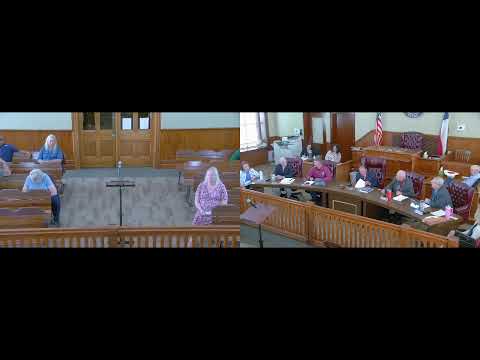
At the June 22 Wilson County Commissioner’s Court, public commenters asked the court to require transparency and limits on water, noise and air impacts from data centers, power plants and solar farms; commissioners said counties lack zoning authority and urged residents to bring formal applications and evidence for review.
Jodie Doyle, speaking for the Wilson County Resource Preservation Project, told the commissioners she represents more than 3,000 petition signers and urged the county to require “guard rails” such as hard caps on water use, noise and air pollution and a system that informs residents before large industrial projects move forward.
"We want to work with you to protect our community from becoming an industrial wasteland of data centers, power plants and solar farms," Doyle said during public comment, and she named the “Messay Energy Hub Project” as an example of development she said affected hundreds of families without prior notice.
The court and staff responded that county authority over such projects is limited. A county official summarized court advice from a recent conference: counties generally cannot zone or impose moratoriums on private land uses and have limited leverage unless a developer requests a tax abatement or seeks permits that trigger local review.
County commissioners urged residents to monitor formal filings and said there has been little to disclose so far. "We have received no application from Mesa," one commissioner said, adding that the county cannot negotiate or require conditions until an application or permit request is filed. Commissioners repeated that some oversight does exist — for example, flood-plain or development permits and other state rules — and staff have prepared recommended permit conditions based on prior solar agreements.
The exchange grew into an extended public conversation about water rights and transparency. Residents pressed commissioners about reported well declines, how many acres have been leased or permitted for industrial use, and whether local economic development entities have conflicts of interest; some commenters urged the county to remove individuals from local development boards if they had overlapping business ties to projects.
Commissioners said they would continue to accept public input, encourage residents to submit concrete evidence or permit applications to the clerk’s office, and pursue any state-level policy changes that could expand county authority.
The court did not adopt any new regulatory restrictions at the June 22 meeting. Commissioners encouraged residents to work with their precinct commissioner and to request briefings from economic development entities if there are questions about projects or agreements.