Get Full Government Meeting Transcripts, Videos, & Alerts Forever!
Get email alerts on the Policy Priorities topic
No spam. Unsubscribe anytime.
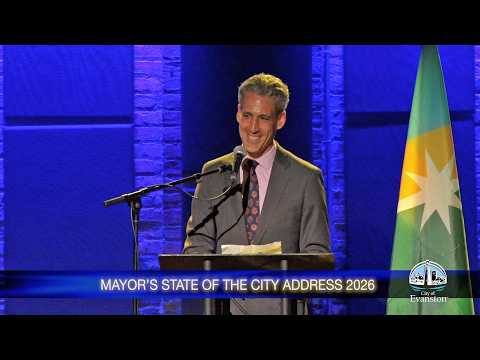
Biss touts care team, reparations, climate rules and Envision Evanston 2045 in State of the City
Summary
In his State of the City address Mayor Daniel Biss highlighted the city’s non-police 'care team,' said Evanston has gone more than three years without a homicide, defended the city’s municipal reparations program amid litigation, touted a stringent healthy-buildings ordinance and urged continued work on the Envision Evanston 2045 housing plan.
Mayor Daniel Biss used his State of the City address to review accomplishments and lay out priorities, citing public-safety changes, the municipal reparations program, climate policy and a long-range housing plan.
On public safety, Biss described the city’s care team as a non-police emergency response that "has now existed for several years" and has "responded to thousands of calls." He credited collaborative work across the police department, the care team and neighborhood groups for what he said is now "more than 3 years since the last homicide occurred in the city of Evanston."
On reparations, Biss said Evanston "became the first community in the country to distribute municipal reparations," and acknowledged ongoing legal challenges. He characterized those lawsuits as "politically motivated" but said they do not alter the city’s commitment to the work.
Biss also highlighted a city "healthy buildings ordinance," which he described as "the strongest climate ordinance of its kind in the Midwest," saying the measure puts Evanston on a trajectory for its largest buildings to have no emissions by 2050.
On housing and planning, he described Envision Evanston 2045 as a complex but essential project that seeks to create more housing that is affordable and to preserve racial and economic diversity "in every neighborhood, in every ward, on every block." He said the plan aims to align the zoning code and housing policies with the city’s equity goals.
Biss acknowledged ongoing municipal needs — including temporary City Hall arrangements, an aging police station and library repair needs — and closed by urging the community to continue building coalitions across differences and take bold, sometimes difficult action to advance stated goals.
Context and next steps: Biss framed the initiatives as ongoing work; he did not announce additional ordinances or funding measures during the remarks. The reparations program and other initiatives remain subject to legal and operational developments going forward.