Get Full Government Meeting Transcripts, Videos, & Alerts Forever!
Get email alerts on the Lakefront Protection topic
No spam. Unsubscribe anytime.
Council member Kelly outlines Lakefront Protection Ordinance; commissioners press equity, accessibility and outreach safeguards
Summary
Council Member Kelly presented a proposed Lakefront Protection Ordinance to keep Evanston’s lakefront public and protect its ecology. Commissioners pressed for explicit provisions on east‑west access, measurable ADA standards, outreach to underrepresented communities, and demographic data collection; Kelly invited recommended language and asked for drafts by the end of next week.
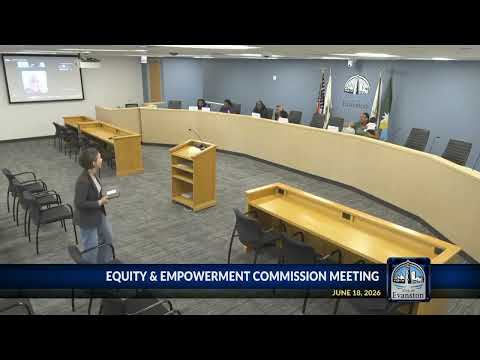
Council Member Kelly presented the Lakefront Protection Ordinance to the Equity and Empowerment Commission on June 18, saying its purpose is "about protecting our most ... one of our most cherished assets for public to keep it accessible" and to preserve the lakefront’s ecological health for future generations.
Kelly told commissioners the ordinance would raise the scrutiny for long‑term leases or sales of lakefront property and would apply to contiguous public property east of Sheridan Road and east of Lakeshore Boulevard, while ‘‘grandfathering’’ existing private structures. She said permanent replacements should use "the most environmentally appropriate" materials and stressed safety and habitat protection.
Commissioners focused much of the discussion on equitable access. "Most of the amenities are located in the East Evanston," Commissioner Ratcliff said, asking how West Evanston residents would gain comparable access. Kelly replied that access is a "primary focus" and suggested public transportation improvements as one tool; she also agreed the ordinance language could be strengthened to better address east‑west access.
Accessibility and measurable standards for residents with disabilities drew follow‑up questions. Commissioners noted the ordinance currently "encourages public transportation but does not require improvements or funding" and that the text does not include clear ADA performance metrics. Kelly said accessibility is a "key component" and agreed to amend the draft to better define measurable accessibility requirements.
Several commissioners raised concerns about outreach and data equity. Ratcliff said the draft does not require proactive engagement with underrepresented communities or the collection of demographic or geographic data to evaluate whether all residents benefit equally. Kelly agreed, saying she would "take note" and integrate demographic participation mechanisms and a stakeholder sign‑up for notification; she invited commissioners to submit language that would add an equity impact assessment and community engagement requirements.
Ratcliff said she would circulate a memorandum with suggested language and recommended the commission review those edits; Kelly asked that any recommended language be returned by the end of next week for consideration. No formal action or vote on the ordinance occurred at the meeting.
The commission’s discussion emphasized preserving public ownership of the lakefront while making procedural and substantive changes to ensure equitable access, measurable accessibility, and proactive outreach. The next procedural step is for commissioners to submit recommended edits and for staff to circulate a revised draft for further review at a future meeting.