Get Full Government Meeting Transcripts, Videos, & Alerts Forever!
Get email alerts on the Waste Transfer Station topic
No spam. Unsubscribe anytime.
Resident coalition asks Evanston to require proactive inspections and post reports for Church Street waste transfer station
Summary
A community coalition urged the APW to require proactive spot-check inspections, post inspection reports online promptly, release an EPA Region 5 response, and provide detailed waste and host-fee accounting for the waste transfer station at 1711 Church Street.
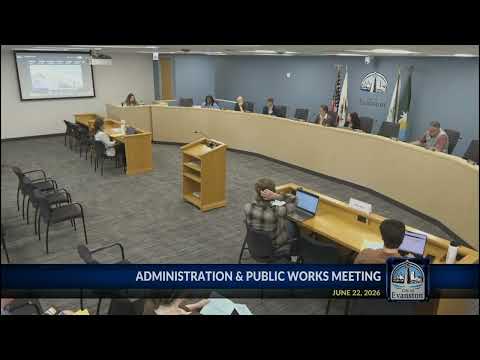
Trisha Connolly, speaking for the Evanston Environmental Justice Coalition and the Waste Transfer Station Coalition, asked the Administrative & Public Works Committee on June 22 to address residents' concerns about the waste transfer station at 1711 Church Street.
Connolly read a letter filed with the committee that asked the city to shift from complaint-driven inspections to a proactive spot-check program that would review operational practices and recordkeeping required under the host community agreement. "The spot check inspection should include a review of operational practices and record keeping covered under the host community agreement," she said.
The letter also asked the city to post all inspection reports online promptly; Connolly told the committee the most recent publicly available inspection report on the city's site is dated 2010 and requested that future reports be posted within 10 business days of completion. She asked the city to make public a December 14, 2020 response from John Mooney of EPA Region 5 that she said is no longer accessible online and to provide data on the type, source and quantity of waste received at the facility — including the percentage originating inside Evanston versus outside jurisdictions.
Connolly pressed for a detailed accounting of how WTS host-fee funds have been spent, pointing to FY2023 and FY2024 host-fee figures cited in the city's budget documents and noting what she described as a significant projected drop in FY2025 host-fee revenue. She flagged a provision in Advanced Disposal's contract that, the letter says, gives the city one year to dispute reported intake tonnage and asked how the city verifies reported tonnage and ensures compliance.
The coalition requested that Council Members Harris and Burns seek pro bono legal counsel from independent environmental organizations such as the Sierra Club or NRDC to assist the community, and asked for a response from the city by June 30. The committee did not take formal action on the requests during the public-comment period; staff and council members acknowledged the questions and signaled they would follow up.
Why it matters: Residents and neighborhood groups say clarity about inspections, tonnage reporting and host-fee spending affects local air-quality oversight and neighborhood trust in how the facility operates. The coalition's requests, if accepted, would change how the city documents and shares compliance information.