Get Full Government Meeting Transcripts, Videos, & Alerts Forever!
Get email alerts on the Rezoning Development topic
No spam. Unsubscribe anytime.
Louisburg council tables heated rezoning for 306 Sandalwood after neighborhood outcry
Summary
After hours of public comment citing traffic, flooding, power outages and neighborhood character concerns, the council tabled a developer’s request to rezone 5.41 acres for a 68‑unit planned development and asked the applicant to return with revised options for the July 14 meeting.
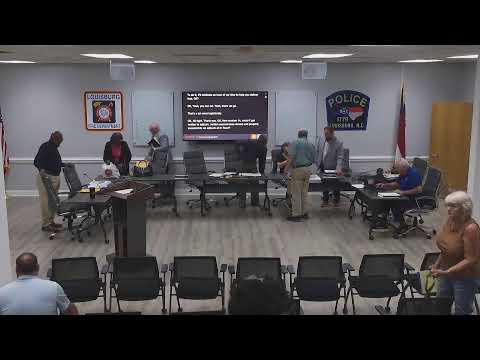
The Town Council on June 30 tabled a contested rezoning application for 306 Sandalwood Avenue after extended public comment and council debate over density, infrastructure and neighborhood impacts.
Planning staff explained the applicant sought a planned‑development designation to build 68 multi‑family units (13.5 units per acre) with on‑site sidewalks, storm‑water control measures and parking. Staff said the 2030 comprehensive plan recommends lower densities for the Woods neighborhood (6–8 units per acre) and recommended reducing the project toward approximately 40 units. The developer and engineers said the site has constraints and argued the proposed design and accompanying traffic‑mitigation measures are appropriate; they submitted a traffic impact analysis that projected 447 daily trips and recommended turn restrictions and striping at nearby intersections.
Residents and petitioners strongly opposed the rezoning. Speakers cited recurring power outages, chronic flooding and inadequate drainage, narrow neighborhood streets, the proximity of schools and day‑care centers, and concerns that the project would reduce property values and strain local services. A written petition of 28 signatures and multiple letters urging denial were entered into the record. Several speakers said a by‑right R2 development of roughly 40 units could proceed without council control and urged the council to negotiate binding design and density limits now.
Council members discussed options—approval as filed, approval with reduced density and binding conditions, denial, or tabling to allow the developer time to propose a lower‑density plan. The council voted to table the item and asked the developer to return with alternate proposals (and asked staff/developer to provide clear written options for residents). The item was scheduled for the council’s next meeting on July 14, 2026.
What happens next: the developer agreed to consider revised scenarios; the council asked that a clear, written comparison of options be posted to the town website and circulated to affected residents before the next hearing.