Get Full Government Meeting Transcripts, Videos, & Alerts Forever!
Get email alerts on the Arts And Culture topic
No spam. Unsubscribe anytime.
Consultants urge town to formalize hybrid arts model and take over Riverwalk facility management
Summary
Summit Street Group told council the town should formalize a hybrid delivery model for arts and culture—move facility management to the town, refocus BCA’s mission on community programming, create an arts-and-culture manager and committee, and run RFPs for historic arts buildings; council members requested two weeks to review the recommendations before deciding.
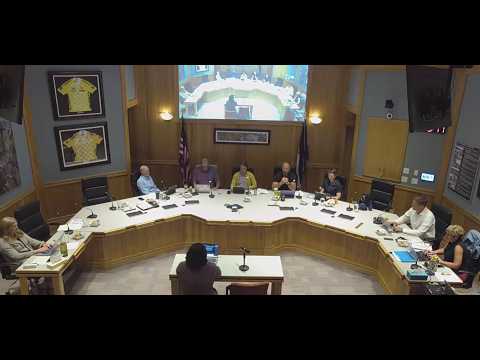
Consultants from Summit Street Group (SSG), joined by Turner and Towns, presented findings and recommendations to the Breckenridge Town Council on June 23 after a multi-month review of arts-and-culture operations, contracts and facilities.
SSG said the town currently operates in a de facto hybrid model—multiple partners, multiple contracts—while earlier expectations had envisioned a single independent delivery agent. That mismatch, the consultants said, has produced recurring tensions: facility operators competing for dates, unclear prioritization between resident tenants and promoter-driven events, and dated or inconsistent agreements and financial reporting that make accountability difficult.
The consultants’ central recommendation is to formalize a hybrid delivery model in which the town assumes full facility-management responsibility for the Riverwalk Center (calendar control, maintenance oversight and capital planning) while contracting with multiple specialized program partners to provide mission-focused and community-focused programming. SSG recommended refocusing Breckenridge Creative Arts (BCA) toward mission-oriented community programming, using RFI/RFP processes to activate the historic arts-district buildings, and creating a town arts-and-culture manager to serve as a neutral liaison between a proposed arts-and-cultural committee and the town council.
SSG said those governance changes should be tied to clearer funding agreements with measurable KPIs incorporated into the annual budget process so stakeholders understand expectations and reporting. They advised that a transition be phased over roughly 12–18 months with near-term actions (procurements, committee formation and updated agreements) starting in time for the FY2027 budget cycle. Consultants underscored that many stakeholders supported improved clarity and that the proposal’s goal was to reduce conflict and improve utilization rather than cut programming.
Council members raised questions about protecting existing programming during a transition, the role of private promoters versus town-run production, food-and-beverage or liquor-license arrangements that affect promoter economics, and options to preserve midyear flexibility for creative projects. Public commenters, including a BCA staff member and a town resident with promoter experience, urged caution about expanding permanent staffing and recommended direct outreach to experienced promoters on market preferences (for example, promoter control of food-and-beverage revenue can be a deciding financial factor).
Council members agreed to allow two weeks for members to review the full SSG report and to revisit the governance recommendation at a follow-up work session; they also authorized staff to hold an executive-session conversation with counsel about the town’s contract with BCA.