Get Full Government Meeting Transcripts, Videos, & Alerts Forever!
Get email alerts on the Social Services topic
No spam. Unsubscribe anytime.
Family & Intercultural Resource Center outlines food, health and financial services and asks for continued town support
Summary
Carla of the Family & Intercultural Resource Center (FK) told the council FK runs about 30 programs including community food markets, peer-support programs for Spanish speakers and a new community health worker team; she reported FY2025 service figures and asked the town to continue funding, volunteer support and advocacy.
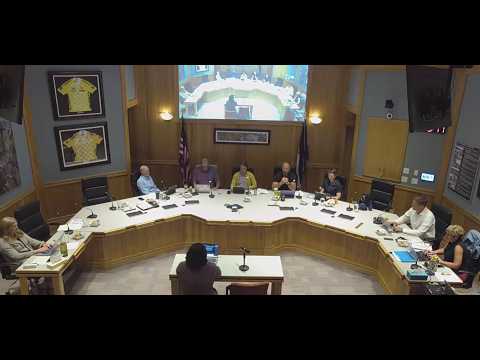
Carla, representing the Family & Intercultural Resource Center (FK), told the Breckenridge Town Council on June 23 that FK’s work reaches roughly one in three Summit County residents and aims to "open doors and unleash community potential." She described FK as a family resource center focused on connecting working households to food, housing help, emergency assistance and health navigation.
Carla highlighted FK’s core programs: community food markets, Spanish-language peer-support programs (Alma and Oxion) funded with Strong Futures dollars, a financial empowerment program that includes case management and housing assistance, and a new community health worker team of four certified workers from Texas A&M University. "We served just under 700 folks in our financial empowerment program and got about $360,000 out the door in emergency assistance," she said, adding FK’s community food markets saw roughly 33,000 visits and distributed an estimated $7.5 million in food value during FY2025.
Carla reviewed service trends, saying FK peaked in demand in 2023 and expects increased food-market visits in 2026 (approximately 35,000 projected) driven by winter impacts and reduced funding. She noted shifting demographics at food markets and the organization’s attention to culturally responsive food and language access.
Looking ahead, FK described plans to pilot refrigerated pickup lockers in remote neighborhoods and high-traffic locations (transit centers, libraries, rec centers) to provide 24/7 access and greater convenience for workers who cannot reach food markets during hours of operation. Carla also announced FK’s thrift store reopening (initially three days a week, expanding to five days a week after July 4) and thanked the town for prior nicotine-fund support, which comprised about 32% of FK’s general operating revenue this fiscal year.
Carla closed by asking for continued town support, volunteer recruitment and help spreading information about FK’s services. "If they're struggling, we can always help," she said, describing FK as a hub that connects clients with additional partners when FK lacks a needed service. Council members thanked Carla for the presentation and offered congratulations on FK’s co-location with Building Hope and the new thrift-store operations.
The council did not take formal action on FK’s presentation; staff and council indicated they would factor FK’s needs into ongoing budget and community-support discussions.