Get email alerts on the Procurement Rfp topic
No spam. Unsubscribe anytime.
Oronoco workshop debates issuing RFP for zoning and engineering after 20-year relationship with Stantech
Summary
At a March 19 workshop, Oronoco council members and staff discussed whether to issue a competitive RFP for zoning and engineering services after roughly 20 years with incumbent firm Stantech, agreed to gather more documentation and stakeholder input, and tentatively targeted fall for a renewed push.
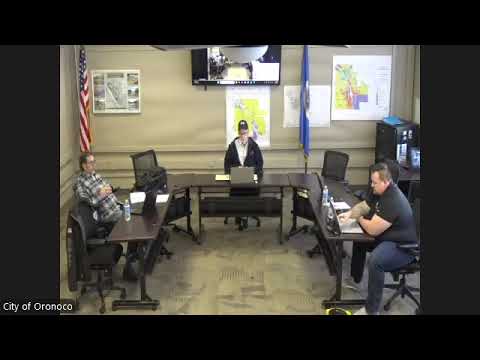
Oronoco council members and staff spent a March 19 workshop laying groundwork for a possible competitive request for proposals (RFP) to provide zoning and engineering services, a step some members said is overdue after roughly two decades with the current contractor, Stantech.
The workshop opened with staff reviewing three documents distributed in advance: the draft workshop agenda, a draft scope-of-work template the group would refine, and a prior RFP used as a formatting example. Participants discussed whether Planning & Zoning (PNZ) and other department staff should have a formal role in drafting the RFP and whether council or staff should lead final decisions on scope and evaluation criteria.
Several council members and staff said the city has not solicited competitive bids for equivalent services in many years and described the RFP as a standard due-diligence step to determine whether the incumbent’s rates and service model remain the best fit. Participants reviewed earlier procurement history: past competitive processes produced other finalists (WSB and Stamp Pack) for related code work, and Stantech has supported municipal infrastructure projects including water and sewer design.
Administration staff told the group they examined records back to 2011 and did not find documented service failures but cautioned that recent financial snapshots may not yet show nearly $300,000 in reimbursements from PFA, which could affect short-term comparisons of costs among bidders. Staff emphasized that responsiveness, institutional knowledge, references and long-term project continuity are valid evaluation criteria alongside price.
Several participants urged caution about timing: the city is managing staff transitions and a heavy workload tied to budget season and construction activity. Staff recommended delaying a full RFP process until administrative capacity improves so staff can devote the necessary time to prepare scope, evaluation matrices and reference checks. Members suggested using the intervening months to collect written input from PNZ leadership and other stakeholders and to develop explicit success criteria for the RFP (for example: responsiveness standards, experience with municipal sewer and water projects, references and a scoring matrix).
As a next step the group agreed to solicit asynchronous input from key stakeholders, hold a tentative follow-up workshop date while staff confirms agenda items, and re-evaluate timing in late summer or early fall. No formal procurement decision or binding vote occurred at the workshop; organizers said they will circulate meeting materials and proposed dates for the next session.
The workshop closed with staff thanking participants and committing to follow up with documentation and a meeting notice so council can continue refining the RFP approach.
AI generated
The text on this page is AI generated. Summaries, highlights, analysis, and video transcripts are all produced from the original source material.
AI can make mistakes, so if you spot one, and we will fix it for everyone.
Note: the source content is unaltered by us. Any content source we link to, be it a video, an audio recording, or a document, is presented exactly as its publisher released it. That publisher is usually a government body, sometimes an individual official or another organisation.