Get Full Government Meeting Transcripts, Videos, & Alerts Forever!
Get email alerts on the Business Sustainability topic
No spam. Unsubscribe anytime.
Local businesses detail practical sustainability steps, cite regulatory and cost barriers
Summary
Manufacturers, breweries and local firms at a Eugene Sustainability Commission panel described on-site efficiency gains, supply-chain challenges and regulatory burdens such as extended producer responsibility and REACH rules, and urged policy makers to pair rules with implementation support.
A panel of Eugene businesses told the City of Eugene Sustainability Commission that practical, often low-tech steps — paired with rebates and partnerships — have yielded meaningful sustainability gains, while regulatory complexity and upfront infrastructure costs remain major barriers.
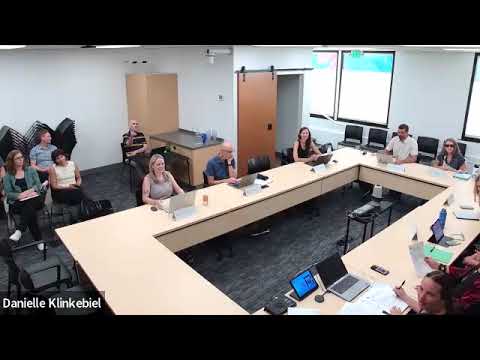
The panel, organized by the commission’s education and outreach committee, brought together representatives from Rosen Aviation, Blue Lotus Chai Company, Drop Bear Brewery and Sierra Pacific Industries to describe what sustainability looks like in their operations. Tadashi Jones of Rosen Aviation said his company’s green team grew out of lean manufacturing work and now focuses on resource use, waste reduction and embedding sustainability into business decisions: “our sustainability initiative really…came out of our lean manufacturing initiatives,” he said.
Why it matters: panelists linked operational changes to business value. Scott Ness of Rosen said customers increasingly require sustainability actions in contracts, giving the company leverage to implement changes. Drop Bear founding brewer David Leah described installing a heat exchanger to recapture cooling water and switching to motion-sensor lighting and LED fixtures — steps he said reduced energy use and helped the business remain viable. Blue Lotus director Sydney Trevol described a warehouse lighting retrofit combined with utility rebates that the company estimates will cut warehouse energy by roughly 30% per year.
The panelists also described industry-scale pain points. Multiple speakers raised extended producer responsibility (EPR) laws, which require producers to account for and sometimes pay for packaging waste across jurisdictions. “For small teams, outside resources that help us get to feasible economic solutions are really important,” Trevol said, noting that differing state rules and reporting requirements can overwhelm small manufacturers.
Electronics and aviation manufacturers described international compliance burdens. Rosen panelists said European rules that require suppliers to declare specific substances across complex bills of material impose a continuous administrative cost; Scott Ness said they contracted a third-party service to handle supplier declarations. Sierra Pacific and others pointed to regulatory rollouts that can be set before operational realities are fully understood, arguing that collaborative, iterative rulemaking would reduce unintended burdens.
Panelists also discussed sector-specific trends: Sierra Pacific emphasized wildfire risk and the need for landscape-scale management and workforce safety; Rosen described early-stage sustainable aviation fuel and electric vertical takeoff and landing craft as sources of innovation but noted current SAF supply and cost limits.
What comes next: panelists urged local policymakers to pair rules with practical support: technical assistance, rebates, and training to help small businesses comply with EPR, pursue energy retrofits, and access new fuels or materials. Several speakers recommended continued partnership with local organizations and utilities to identify rebate opportunities and on-site efficiency measures.
Quotes in context: “If our customers demand it, that’s a tool we can use,” Scott Ness said of contract requirements for sustainability. “Extended producer responsibility laws are popping up…small teams like ours are on the verge of being required to comply,” Sydney Trevol said, describing the reporting burden.
The commission recorded the panel and made the session available to the community; staff said the recording and supplemental materials will remain publicly accessible.