Get Full Government Meeting Transcripts, Videos, & Alerts Forever!
Get email alerts on the Stormwater Rates topic
No spam. Unsubscribe anytime.
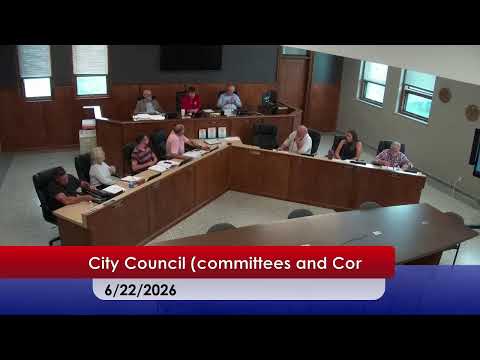
Utility committee endorses reclassification of nonresidential stormwater fees; small "home business" accounts to see cuts
Summary
Staff told the utility committee they remeasured impervious area across 723 commercial and industrial properties and propose reclassifying accounts so 122 very small "home business" customers would see their stormwater charge fall from about $186 to $78.45; residential charges would not change. Notices and a 90-day review period were proposed; implementation targeted for January 2027.
Greg Toth and Harold Allen presented the utility committee with a reclassification of nonresidential stormwater rates intended to reflect measured impervious area rather than broad square‑foot cutoffs. Toth said this is not a rate increase overall but rather a rebalance that will lower charges for some small commercial accounts while raising others to preserve system funding.
Toth said staff studied ‘‘every single property’’ and found the department could better allocate charges by size. He told the committee that of the roughly 723 commercial and industrial customers surveyed, 384 had been in the smallest existing commercial category and 122 of those were very small properties that staff considered home businesses. ‘‘We’re taking their rate and lowering it significantly,’’ Toth said, noting the 122 smallest accounts would move from about $186 to $78.45. He added that residential stormwater rates would remain unchanged.
Staff said letters would be mailed to every affected customer, with a 90‑day window to contact the utility for an explanation or to ask for a remeasurement using a third‑party reviewer. If customers raise concerns during that period, staff said they would revisit measurements but did not anticipate changing the underlying methodology.
Committee members asked for a breakdown by category (staff pointed to the packet’s page nine for details) and whether large customers had been consulted; staff said major industrial customers had been contacted and that some voiced displeasure but understood the equity rationale. The committee agreed to move the proposed schedule to the July council meeting as a proposed rate set, with final adoption targeted later in the year and implementation identified for January 2027.
What happens next: The item will appear on the July council agenda as a proposed rate schedule. Staff will send individualized notices to affected customers and allow 90 days for formal responses or requests for remeasurement.
Why it matters: Stormwater funding pays for citywide infrastructure and regulatory compliance: reclassifying accounts changes how costs are distributed across businesses and residents and can materially affect small operators’ expenses. The committee framed the changes as trying to increase equity while protecting system funding.