Get Full Government Meeting Transcripts, Videos, & Alerts Forever!
Get email alerts on the Transgender Policy topic
No spam. Unsubscribe anytime.
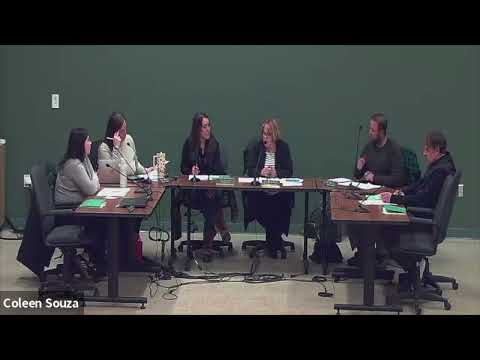
Winthrop School Board debates transgender policy, weighing local practice against legal risk
Summary
The board discussed its current JB/JBR policy and a recommended ACAA policy that explicitly references gender-expansive students; the superintendent and board members outlined legal context (pending Maine Human Rights Commission actions, a $250,000 insurance defense cap across defendant districts) and principals said local accommodations have worked without major incidents.
The Winthrop School Board spent a large portion of its meeting discussing district policy on transgender and gender-expansive students. Superintendent Dr. Foley reviewed the district's current policy (JB and regulation JBR), described differences in a more recent model policy (ACAA), and summarized the legal context, including pending actions brought by the Maine Human Rights Commission against multiple districts and an insurance defense cap.
Dr. Foley told the board that "currently six" school districts are the subject of actions by the Maine Human Rights Commission and that the district's insurer provides a collective $250,000 cap for legal defense costs across the defendant districts; once that limit is exhausted, districts would be responsible for remaining costs locally. He said the district's current JB policy remains compliant with Maine law and that an ACAA policy is not legally required.
Board members voiced divergent views. Board member Tim said, "I do not want a biological boy in a biological girl's class bathroom or a locker room," and argued for protections for girls' spaces and sports. In contrast, board member Libby cited data from the Maine Integrated Youth Health Survey noting "less than 4% of Maine students that are transgender" and urged caution about portraying transgender students as a threat. Other members raised fairness in athletics, risks to federal funding, and the legal exposure of changing policy away from state law.
School leaders described how the district has managed individual accommodations. The high school principal said the district had two students in recent years who used restrooms aligning with their gender identity and that single-stall and nurse's bathrooms are available; "we have not had any challenges with that," the principal said. The middle-school principal reported one student over the last three years who used the nurse's bathroom for privacy and said parents were supportive.
The board discussed policy options, including retaining JB/JBR, adopting a differently worded district policy, or removing the policy altogether (some nearby districts have repealed or relocated similar language to other policy sections). There was no formal vote to change policy at this meeting; the board directed further research, asked the policy committee to review sample language from districts with differing approaches, and requested comparative policy language and additional legal context for a future meeting.
Ending: The board requested follow-up information (sample policies from other districts, additional legal research and clarifications on athletics rules), and scheduled continued discussion at future meetings. No policy change was adopted at this session.