Get Full Government Meeting Transcripts, Videos, & Alerts Forever!
Get email alerts on the Transition Center topic
No spam. Unsubscribe anytime.
District 86 presents Transition Center action plan after external review; administration recommends efficiency measures, staffing realignments
Summary
District 86 administration presented an action plan responding to an external review of the Transition Center, citing strong employment and college-persistence outcomes but a 37% enrollment increase and fiscal pressures. Changes include a February 1 decision deadline for senior enrollment, paraprofessional reductions, transportation efficiency efforts, and continued community-based programming.
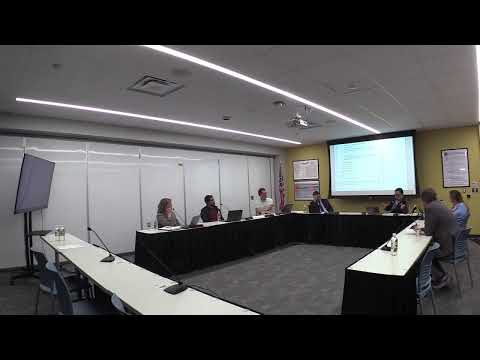
Superintendent Dr. Chip Pettit and transition-center staff presented a multi-month action plan June 25 responding to a March external review by Dr. Daniel Kates that recommended efficiencies to sustain the district’s Transition Center for 18–22-year-olds with disabilities.
The administration said Transition Center outcomes are strong: competitive employment and college persistence rates reported by the district exceed national and community-college benchmarks. Dr. Pettit and Assistant Superintendent Dr. Carrie Smith stressed the program’s outcomes while acknowledging a 37% enrollment increase in recent years that has strained operations and budgets.
Director Katie Diani and Assistant Director Katie McCale outlined the program model: individualized transition planning required under IDEA, community-based authentic practice, a robust internship program and six flexible career/education pathways (recreation/leisure, supported employment, employment/vocation, hybrid, and two college-access tracks). Diani said these pathways are designed to maximize independence and mirror post‑school life.
CFO Josh Stevenson walked the board through the financial context and potential savings. He said the college-access programming accounts for roughly $1.2 million in operational expenditures (about 17% of the Transition Center operational budget and roughly 1% of the district’s total operations). The administration argued eliminating the college-access program would be damaging to students and produce only modest district‑level savings; discontinuing transportation for that program would save an estimated $180,000 but would erode student access.
To improve predictability, the administration proposed moving the Transition Center acceptance decision date to February 1 for seniors recommended for the program. Staff said the earlier date is not binding — families may still change their decision through graduation — but it would support better early enrollment projections and preliminary staffing plans.
The plan includes modest staffing adjustments for 2026–27: consolidation of two pathways reduced certified staff by 1.2 FTE and the recommended 2026–27 plan consolidates one administrative assistant and four paraprofessionals (two reductions come from the college-access cohort, representing a 50% reduction for that subgroup). Administration said it will monitor impacts carefully and prioritize essential services and student outcomes.
Transportation remains a central driver of costs. Transition Center staff and the CFO described steps already taken to increase in‑district driving capacity (certifying more district drivers) and reduce shuttle dependence; projected transportation efficiencies could approach $400,000. Administration said it would continue to pursue a mix of utilization and in‑house strategies to manage costs without cutting core services.
Board members asked for continued monitoring and clarity on enrollment persistence, mid-year exits and programmatic implications of staff reductions. Several trustees praised the Transition Center’s outcomes and asked administration to continue balancing fiscal stewardship with program quality.
The board did not vote to eliminate any programs; it accepted the administration’s action plan and directed staff to implement changes, track impacts, and report back.
Ending: Administration will return enrollment and staffing updates and monitor metrics — including the February 1 decision-date effect, midyear exits, and transport/utilization savings — before making further structural changes.