Get Full Government Meeting Transcripts, Videos, & Alerts Forever!
Get email alerts on the Traffic Management topic
No spam. Unsubscribe anytime.
Council pauses decision on four-way stop for Columbia and Seminary after extended public hearing
Summary
Council continued the public hearing on ordinance 915 (a proposed four‑way stop at Columbia Avenue and Seminary Avenue) to July after residents and emergency services raised concerns about queuing, school access and emergency-vehicle impacts; the council highlighted it will rely on an engineering study before taking a final vote.
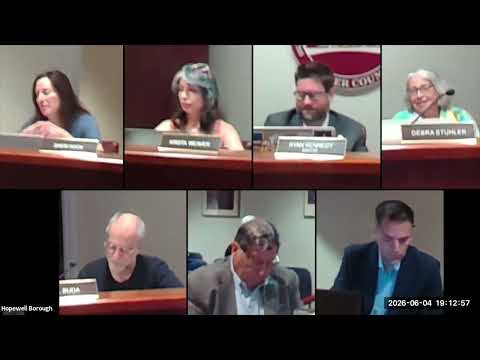
The Hopewell Borough Council carried the public hearing on ordinance 915 at its June meeting, delaying final action until a July meeting while an engineering study examines whether a four‑way stop at Columbia Avenue and Seminary Avenue would cause queuing or impede emergency responders.
Why it matters: Residents described Columbia Avenue as a longstanding cut‑through that already experiences backups and truck traffic; school proximity and EMS access were central concerns. Council emphasized that any change will be based on engineering evidence and consultation with emergency services.
During the continued hearing, several residents described traffic patterns and potential unintended consequences if a stop sign caused queueing that could block emergency vehicles. One resident noted the street functions as a cut‑through used to avoid congested intersections and asked how a citizen petition advanced to an ordinance on the council calendar.
Council said the Columbia petition prompted staff to ask engineers for an evaluation. "That petition was another way residents asked us to look at the issue," Mayor Kennedy said; he and staff explained that petitions, emails or in‑meeting requests can all trigger an engineering review. Councilwoman Weaver and others noted prior PBS (pedestrian, bike and safety) committee recommendations and recommended low‑cost pilot and tactical approaches—such as striping, narrowing with pavement markings, or a temporary tactical urbanism demonstration—before installing permanent signage.
Emergency‑services concerns were discussed: staff and council reported meetings with EMS and the fire department and said the engineering study will specifically test for backups that would interfere with emergency access. The council pledged further consultation with the fire department and engineers before any adoption.
Action taken: Council voted to continue the public hearing to the July meeting with no further notice to collect engineering evidence and stakeholder input; the motion carried in a roll‑call with a mix of recorded yes votes, at least one no vote and an abstention recorded in the transcript.
What’s next: An engineering study will measure queueing, signal timing impacts and potential backups; the study results and any recommended mitigations will be presented at the continued hearing. Residents were encouraged to file OPRA requests for the petition and to report specific problem locations to the administrator so staff can compile data for the engineers.
Ending: The council did not adopt ordinance 915 at the meeting; the hearing will resume in July after the study and further stakeholder consultation.