Get Full Government Meeting Transcripts, Videos, & Alerts Forever!
Get email alerts on the Energy Moratorium topic
No spam. Unsubscribe anytime.
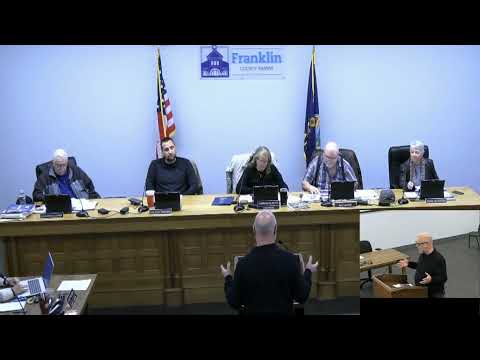
Franklin County extends commercial wind moratorium, adds temporary solar pause in rural areas
Summary
The Franklin County Board of Commissioners approved Resolution 26-05 on Jan. 28, 2026, extending a moratorium on commercial wind projects and imposing a temporary moratorium on commercial solar in rural areas through Dec. 31, 2028. Commissioners said the extension allows time to review the comprehensive plan and county regulations.
The Franklin County Board of Commissioners voted unanimously Jan. 28 to adopt Resolution 26-05, extending the county’s moratorium on commercial wind energy projects and adding a temporary moratorium on commercial solar projects in rural areas through Dec. 31, 2028.
County staff said the earlier moratorium (Resolution 23-21) expired at the end of last year. "It would be resolution 26-05 and it would be extending the existing moratorum on commercial wind projects and also adding a temporary moratorum on commercial solar projects in the rural areas of Franklin County through December 31st," a county staff member explained during the meeting.
Commissioners framed the vote as a pause to give the county time to update its comprehensive plan and to consider rules other counties have used. A commissioner summarized concerns about the potential effects of large renewable projects on "rural life" and the county’s natural character; commissioners said those concerns warrant a deliberate review of land-use rules before permitting resumes.
The motion to approve Resolution 26-05 passed on a roll-call vote with all present commissioners recorded as voting yes.
The resolution applies to commercial-scale projects and, as presented, runs through the end of 2028; staff said the board can revisit or rescind the measure later. The board did not adopt new permitting standards at the session; staff advised that drafting a replacement framework and any regulatory changes would proceed through normal planning and legislative steps.
Next steps identified at the meeting included directing staff to begin a comprehensive-plan review, gather comparative regulations from other counties, and (if the majority wishes) prepare a proposed implementing resolution or ordinance for later consideration. The board’s action is procedural: it pauses permitting rather than approving substantive new restrictions at this meeting.