Get Full Government Meeting Transcripts, Videos, & Alerts Forever!
Get email alerts on the Excavation Rsa 155e topic
No spam. Unsubscribe anytime.
After finding no 1991 excavation report on file, planning board orders owner to file report within 12 months with one‑time extension
Summary
Staff told the board that no excavation report required by RSA 155‑E is on file for 56 Cory Pond Road (a historically operated sand pit). The board ordered the owner to file the required report within 12 months and allowed a one‑time 12‑month extension; legal counsel advised the board cannot grant a lifetime waiver.
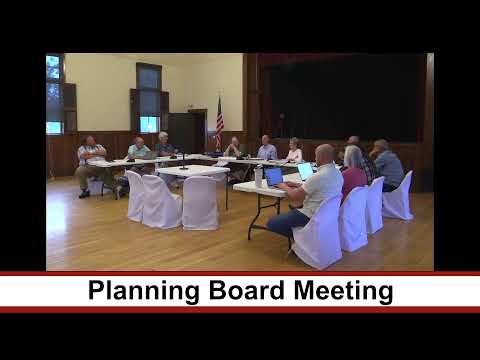
The Swansea Planning Board on June 25 concluded that town records do not contain the excavation report required under RSA 155‑E for a long‑operating sand pit at 56 Cory Pond Road (tax map 239, lot 69) and directed the property owner to submit the missing report within 12 months, with a single one‑time 12‑month extension permitted.
Planning staff summarized the statute and records history and said the missing excavation report is pivotal. "Under RSA 155‑E, grandfathered excavations are those lawfully in operation between Aug. 24, 1977 and Aug. 24, 1979, which are exempt from permit requirements, provided that they have not expanded," staff said. He noted the statute required planning boards to solicit and owners to file an excavation report by August 4, 1991, and that the town has no such report on file for the Johnson operation.
Staff proposed a 12‑month compliance timeline to file the report; legal counsel advised that the board cannot grant a lifetime waiver and that land‑use rules attach to the property, not the individual owner. The board discussed options and ultimately voted to require submission of the excavation report within one year and allowed one one‑time 12‑month extension if the owner needs more time.
Owner representatives and a consulting engineer urged the board to consider local history and precedent. Emily Kurlo, speaking at the meeting, said the Johnson family has operated the pit for decades and requested leeway; consultant Molly Compton of Compton Consulting LLC, who identified herself as an engineer and seasonal abutter, reviewed RSA guidance and state case law and urged the board to consider reaffirming grandfathered status or, if the board could not confirm grandfathering, to grant a permit without restrictions for a period recommended in the RSA handbook.
Compton cited the three‑prong test described in the RSA excavation handbook and state cases (noting Wolfeborough v. Smith) — that an operation existed when the law took effect, the area was intended to be excavated, and continued operations would not have an adverse neighborhood impact — and argued the Johnson operation meets those factors. Board members acknowledged the town's historical role in accepting the operation but said the missing paperwork requires a contemporaneous record to remain in municipal files.
The board's motion requires the owner to file the excavation report documenting the location and start date of excavation, a description of permissible expansion limits, an estimate of the area already excavated, and an estimate of commercially viable earth material remaining, within 12 months. The motion carried; the board recorded that the owner may request a one‑time 12‑month extension and that the planning department will monitor compliance.
What happens next: the owner must submit the excavation report within the specified time; if the owner later requests an extension, the board will consider it. The department will document compliance in the property file and coordinate any required permitting steps if the site is not affirmed as grandfathered.