Get Full Government Meeting Transcripts, Videos, & Alerts Forever!
Get email alerts on the Zoning Land Use topic
No spam. Unsubscribe anytime.
Bloomfield hearing explores tighter rules for ground-floor housing on courthouse square
Summary
At a public hearing, council members and business owners debated proposed language to limit or require separate rear entrances for first-floor residential units in the Courthouse Square commercial district. Owners warned of retrofit costs and potential displacement; council took no final vote.
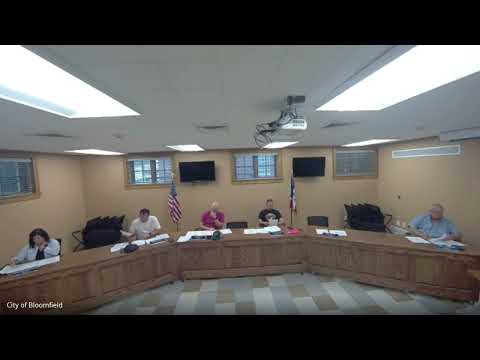
The Bloomfield City Council held a public hearing on a proposed amendment to the Courthouse Square commercial-district ordinance that would restrict residential use on the ground floor and require separate exterior entrances for any first-floor dwelling entering from the square. Tommy, who introduced the item for staff, said the change was prompted by Main Street’s concern that storefronts should remain commercially occupied and by tours that suggested some first-floor spaces appear residential rather than retail.
The hearing produced sharply practical questions from property owners. One owner who said he owns 113 and 114 East Jefferson warned, “I can’t imagine that the benefit of this would outweigh the cost of making 30 people homeless on the Square,” urging the council to avoid unintended displacement and to consider how hard it is to keep small businesses open. Owners and council members discussed whether the word “any” in the proposed draft should instead target only first-floor residential use and whether narrow or small storefronts could practicably be split to allow both retail and an apartment.
City staff and code officials clarified the enforcement and building-code tradeoffs: new living quarters created by permit typically trigger requirements such as sprinklers and firewall/hallway construction, which can be costly; existing, grandfathered units would not automatically require those upgrades unless a new permit or renovation is pursued. Council members said they wanted stronger, clearer language to prevent flimsy conversions (for example, sheet partitions) and discussed municipal infractions or fines tied to the ordinance’s 51% threshold for first-floor residential use.
No ordinance was adopted at the meeting. Staff and council emphasized this was a fact-finding public hearing for input. The council closed the hearing by motion and agreed staff would redraft the language to address the concerns raised, with any ordinance to return for formal readings and votes in subsequent meetings. Several council members and owners said they favored grandfathering existing lawful residential units while tightening standards and enforcement for future conversions.