Get Full Government Meeting Transcripts, Videos, & Alerts Forever!
Get email alerts on the Recycling topic
No spam. Unsubscribe anytime.
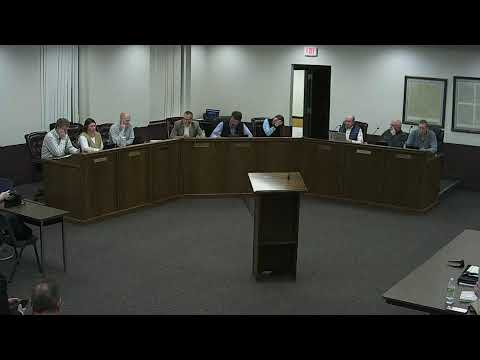
Sheldon City Council advances recycling, illegal-dumping ordinance drafts and debates removal of community rolloff
Summary
Council voted to advance draft ordinances to address illegal dumping and to standardize residential recycling containers; members debated keeping a community rolloff, subsidizing curbside cans, billing logistics and an August implementation target for can requirements.
Sheldon City Council voted to advance two draft ordinances—one tightening rules on illegal dumping into recycling containers and another amending code section 105.09 (waste storage containers)—to the next step for attorney review and future first reading.
City staff member Sam introduced several ordinance options and told the council the drafts have not yet been vetted by the city attorney, urging the council to treat the motions as direction to prepare ordinances for first reading rather than adoption of final language. "These have not been vetted by our city attorney. These were written by me based on the old ordinance and what I'm seeing around the state," Sam said.
Council discussion focused on operational details: whether to require standardized curbside cans (35/65/95 gallons), how to prevent garbage from being placed in recycling containers, and whether to keep or remove the town'operated community rolloff that currently allows residents to drop recyclable materials at no charge. Sam and other council members said the motion to advance the draft allows attorney cleanup and scope refinement before a formal first reading.
On logistics and incentives, councilmembers debated whether the city should subsidize container purchase or instead stop subsidizing rolloff disposal costs (estimated in discussion at about $6,000 per year). Council member Brad H argued the city should favor curbside recycling and suggested redirecting existing rolloff expenditures toward subsidizing cans; Sam noted the hauler, Mark, offered to dump the community rolloff twice a week and more during peak times at no cost to the city if the can program is implemented. Mark confirmed his willingness when asked: "Twice a week. Yes," he said.
Councilmembers also raised practical questions about billing and enforcement (color/labeling of cans, whether the clerk's office would handle sales and billing), and about timing: staff discussed an implementation target around Aug. 1 for requiring compliant cans and noted roughly 400 households would need compliant containers, while another figure of 900 was referenced in the discussion and remained unresolved in the record.
The council voted unanimously on roll call to move both ordinance drafts forward for legal review and subsequent first readings; members directed staff and the city attorney to prepare motions or resolutions that reflect the concepts discussed and to return with refined language and implementation options.
The council did not adopt final ordinance language and left key details unresolved: subsidy level (if any), whether the city will bill for can purchases, exact enforcement language for illegal dumping, and the final implementation timetable. Staff and council asked that the attorney and city staff draft a motion or resolution incorporating the council's conceptual direction for prompt return to the council for formal action.