Get Full Government Meeting Transcripts, Videos, & Alerts Forever!
Get email alerts on the Jail Operations Reentry topic
No spam. Unsubscribe anytime.
Santa Fe County highlights jail treatment, re‑entry work and calls for a regional re‑entry summit
Summary
County officials showcased the Adult Detention Facility's treatment and re‑entry programs—tablet education, MOUD, Matrix therapy and RISE housing—reported declines in assaults and described life‑saving Narcan/Opvee responses; commissioners requested data on arrest trends and asked staff to form a re‑entry design team to operationalize regional funding.
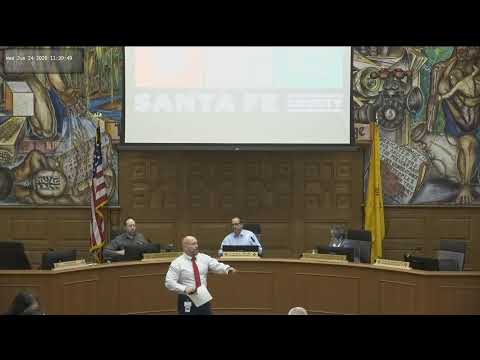
Santa Fe — County leaders on June 24 heard a detailed briefing on the Santa Fe County Adult Detention Facility (ADF), including medical and behavioral‑health treatment, tablet‑based education, and partnerships that aim to move people from custody into community care.
Warden (title used throughout the meeting) told the Board the facility currently houses about 200–216 people daily, with an estimated capacity of roughly 420 general‑population beds, and that daily bookings have risen even as the average daily census has dipped. "We screen, treat, and connect everyone," the Warden said, describing intake screening, withdrawal management and efforts to sustain continuity of care after release.
Why it matters: Commissioners focused on how short stays — roughly half of people are released within 48–72 hours — complicate efforts to start or continue treatment. County staff emphasized that intensive short‑term interventions, warm handoffs and community partnerships can improve outcomes even when people are detained briefly.
Key program elements presented
- Medication‑assisted treatment and withdrawal care: Health services staff reported ADF offers all FDA‑approved MOUD pathways (buprenorphine/Suboxone and Sublocade, methadone via OTP partners, and naltrexone/Vivitrol). The facility provides bridge prescriptions and uses e‑prescribing (SureScripts) to reduce lapses in care. The health services administrator said opioid‑settlement dollars spent to date total about $884,000 and that a FY27 budget projection includes roughly $650,000 earmarked for continued treatment work.
- Overdose response: The Warden and medical staff said ADF equips security and medical personnel with naloxone (Narcan) and the FDA‑approved synthetic‑opioid reversal agent Opvee. Between Jan. 25 and Apr. 26 the facility recorded 33 unresponsive incidents that staff credit as lives saved through rapid response and reversal drugs.
- Tablets and in‑custody programming: Officials reported roughly 125 unique tablet users logged about 978 learning hours in courses spanning job skills, finance, recovery, education and faith. Tablets also host a brief re‑entry orientation video that new intakes must view before accessing other content.
- Matrix treatment and re‑entry housing: The behavioral health manager described the Matrix therapeutic community (20 rounds since 2018) and cited program outcomes: 129 graduates accepted and a 58% non‑recidivism rate among program completers. RISE transitional housing began as a pilot and expanded to three homes (including one for women); staff said 143 people have used re‑entry housing since its inception, with 13 currently housed.
Partnerships and MOUs
County Community Services staff and contract partners described four key MOUs: HRSA‑funded work with Presbyterian Medical Services that embeds peer workers into intake and court processes; New Mexico Re‑entry Center housing and employment supports; Life Link's RISE Houses and in‑jail services; and Albuquerque Health Services MAT clinics that run regional clinics and follow up after release. Anne Ryan of Community Services said the county site became a national model for MAT services in jails under the Building Bridges grant.
Commissioner questions and board requests
Commissioners pressed staff for more data on the reported rise in arrests and asked for a breakdown by charge type and originating jurisdiction (city, sheriff, other counties). Commissioner Adam Johnson and others asked how ADF verifies medications at intake; staff explained they use SureScripts and the Prescription Monitoring Program as part of intake medication verification and will provide follow‑up data to the Board.
Several commissioners urged the county to convene a regional re‑entry summit and to form a focused design team to operationalize about $11 million in regional transitional‑housing appropriations and to assess use of opioid‑settlement funds. County Manager Shafer and staff said the funds are not pre‑earmarked to a single provider, that sustainability will be a primary selection criterion, and that a solicitation or competitive process is likely.
Leadership transition and next steps
The Warden announced his planned retirement (effective in September) and commissioners and the county manager said they are recruiting for the post with planned overlap to ensure a smooth handoff. Commissioners requested an exit memo from the Warden outlining staffing and expansion needs tied to the ADF’s evolving clinical role.
The board approved the meeting agenda at the start of the session and later moved to adjourn; commissioners scheduled a site tour of the jail for 12:30 p.m.
What remains open: Staff promised to provide commissioners with arrest‑trend data that explain the higher intake numbers, a more detailed spend plan for opioid‑settlement and FY27 budget items, and a proposed timeline for the regional re‑entry design team and summit.