Get Full Government Meeting Transcripts, Videos, & Alerts Forever!
Get email alerts on the Reading Curriculum topic
No spam. Unsubscribe anytime.
Berlin board adopts state‑aligned reading materials ahead of July 2025 deadline
Summary
The Berlin Board of Education voted to adopt a package of reading materials — including Wit and Wisdom and phonics components — to meet a state mandate requiring districts to align curriculum with the 'science of reading' by July 1, 2025. Staff outlined training and assessment plans for implementation.
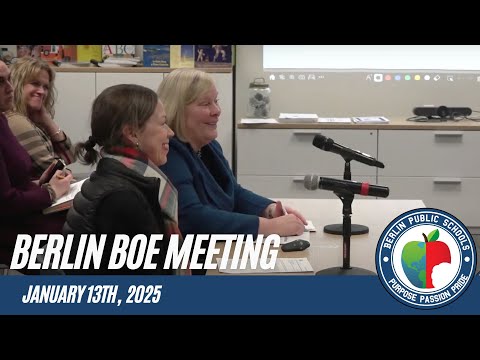
The Berlin Board of Education voted Jan. 13 to adopt a package of reading materials designed to comply with a state requirement that districts align instruction with the "science of reading" by July 1, 2025.
District literacy staff presented the package as a single adoption that pairs a whole‑class language‑comprehension program with phonics and small‑group components. "We chose Wit and Wisdom for the language‑comprehension piece and paired it with From Phonics to Reading and a phonemic‑awareness program so the district has both word‑recognition and comprehension components," said Lori Donovan, a literacy specialist who spoke to the board. She described the selection as the result of a yearlong vetting process that included teacher review, site visits to other districts and a literacy‑protocol rubric.
The presentation emphasized professional development and assessment plans. Donovan said the district will provide February training for all preK–5 teachers on the science of reading and additional summer curriculum writing and module work so teachers reach a common starting point. "The professional learning was exceptional," she told the board, adding that the program offers scaffolded tools, videos and small‑group materials to support teachers.
Board members asked how student progress will be measured; staff replied that unit assessments embedded in the materials will be used and the district will continue three annual screening checks with DIBELS for early grades. "We'll continue to use DIBELS three times a year," Donovan said.
The motion to adopt the materials as presented was made and seconded; the board approved the package. Supporters said adopting the components together would show a coherent implementation plan if state reviewers request documentation.
Implementation will include district training in the spring and ongoing supports next school year; district staff told the board that further curriculum‑writing and resource creation are planned for summer 2025. The board did not vote on budget allocations tied to the adoption during this meeting; the reading program’s estimated $500,000 cost was addressed later in the budget presentation.
The board’s adoption completes the local step of curriculum selection; the district still must carry out the training and assessments described to satisfy the state implementation timeline.