Get Full Government Meeting Transcripts, Videos, & Alerts Forever!
Get email alerts on the Class Size Curriculum topic
No spam. Unsubscribe anytime.
Board questions under-10 high-school sections and considers odd/even-year scheduling for low-demand electives
Summary
Board members pressed staff about under-enrolled high-school classes and low-demand electives (math-and-music, math-and-art); staff said some under-10 flags were resolved after reconciling concurrent sections and that a CTE audit and possible odd/even scheduling are being considered to improve access and make courses runnable.
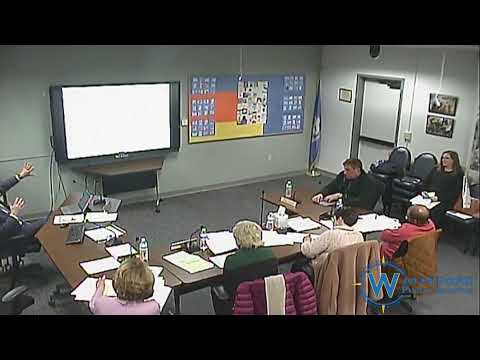
Members of the Waterford School District finance committee spent significant time on Feb. 3 reviewing class-size reports and course enrollments at the high school, pressing staff to reconcile section-level data and to consider schedule changes for persistently low-enrollment electives.
One board member called attention to a suggested district minimum class size of 10 and said she had identified as many as 10 sections flagged below that threshold in the high school. Staff explained that some flagged sections were artifacts of reporting and that certain courses run concurrently (multiple course codes in the same classroom and period) so reconciliation with PowerSchool and section totals removed some under-10 counts.
"We actually do have a suggested minimum in Waterford of 10," the presenter said, noting exceptions for AP, ECE or special scheduling circumstances. Staff walked the committee through examples (photography, 2D/3D art, journalism) and explained how AB block scheduling and combined-semester courses can leave apparent under-enrolled sections that are runnable when viewed as concurrent sections.
The board also raised practical concerns about newly introduced electives such as math-and-music and math-and-art, which had only a small number of student requests (five and nine, respectively). The administration proposed options to make these courses sustainable, including alternating them in odd/even years or reconfiguring them in future curriculum renewal efforts so that limited student demand can be concentrated into runnable offerings.
Career and technical education enrollment gaps also drew attention: staff noted that student requests sometimes exceed seats (for example, advanced woodworking and automotive engineering), and they announced a planned CTE audit and the visit of a state CTE consultant ahead of a summer curriculum renewal intended to increase flexibility and semesterization of CTE courses.
Board members asked for follow-up data, including reconciled PowerSchool reports and three-year enrollment studies, and staff committed to provide the requested reconciliations and historical request counts at upcoming workshops.
The committee did not take formal action on class-size policy at the meeting; staff said further analysis and schedule changes will be considered in the context of the budget process and curriculum reviews.