Get Full Government Meeting Transcripts, Videos, & Alerts Forever!
Get email alerts on the Horse Tax Exemption topic
No spam. Unsubscribe anytime.
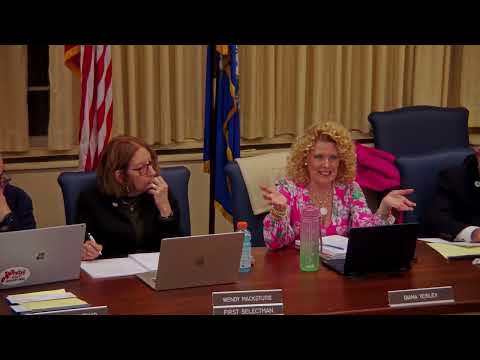
Simsbury board approves ordinance exempting horses from personal property tax after heated public hearing
Summary
After a lengthy public hearing with competing testimony from equestrian-business owners and residents, the Board of Selectmen voted 5–1 to adopt an ordinance allowing the town to exempt horses and ponies from personal property taxation, effective for the 2025 grand list.
After a lengthy public hearing and extensive public comment, the Board of Selectmen voted to adopt an ordinance giving the town the municipal option to exempt horses and ponies from personal property taxation.
Supporters of an exemption — including boarding‑stable operators and employees — told the board that the assessor’s current valuation methods produce very wide value ranges and a heavy administrative burden that threatens local equestrian businesses. Linda Crowitzky, speaking on behalf of a Folly Farm proprietor, said assessors’ AI‑generated values can be wildly divergent and that frequent turnover of boarded horses makes accurate, timely reporting difficult for facilities that manage dozens of animals. “The assessors are inputting extreme, vague data,” Crowitzky said, adding that the burden of collecting ownership information and fighting assessments has harmed local businesses and disrupted client relationships.
Opponents said exemptions would shift tax burdens and create unequal treatment that benefits a small number of large operations. One commenter argued that horses are personal property under state law and that the town’s assessor should enforce existing statutes and evaluate each case. Several residents urged the assessor to provide clearer valuation rules and more third‑party appraisal guidance before adopting an exemption.
Town staff and the assessor described the practical difficulties of uniformly valuing equines: certificates of ownership and the wide range of show, breeding and lesson‑horse values complicate consistent assessment. Town staff told the board that enforcement has lacked reliable, scalable methods to find and value all animals on the grand list, resulting in uneven revenue and repeated appeals.
After discussion, the board passed the ordinance by voice vote; members reported the tally as five in favor, one opposed. The ordinance will take effect for the 2025 grand list after the required publication period and the board authorized publication of the ordinance summary.