Get Full Government Meeting Transcripts, Videos, & Alerts Forever!
Get email alerts on the Facility Use Polling topic
No spam. Unsubscribe anytime.
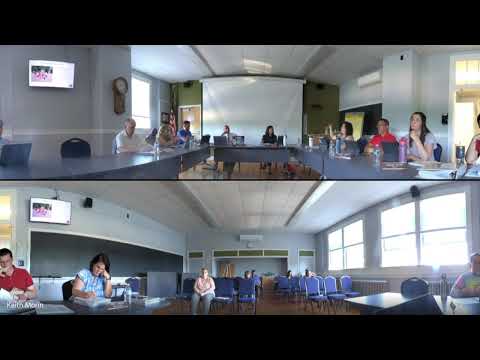
RSU 18 board deadlocks over Sydney's request to use James Bean School as polling place
Summary
The RSU 18 board debated a request from the town of Sydney to use James Bean School for the Nov. 3 election, citing student safety, operational disruption and state certification. A motion to deny the request failed in a tied tally; the board asked the town to send a representative and explore alternatives before reconsideration.
The RSU 18 board spent more than an hour debating a request from the town of Sydney to use James Bean School as a polling place for the Nov. 3 election, raising concerns about student safety, traffic and lost instructional time.
The issue began when the superintendent's office forwarded a request from Sydney asking to use the James Bean facility. Principal Carrie Brennan told the board, "As principal of the school, it is my job to advocate to have our students in the building every day that we are scheduled to be in the building," and described how a single-day closure would remove one day of classroom learning, disrupt breakfast and lunch service and complicate staff-childcare needs.
Board members pressed for alternatives and for a town representative to appear. Several members said the town had had months to seek certified alternate locations and emphasized the board's duty to protect students. One board member urged the board to send a clear signal so the town would begin exploring other options promptly: "The longer we drag this out, the more they can make the argument," the member said, urging a decisive reply.
After extended discussion, a motion to deny Sydney's request was called. The transcript records the motion as failing on an evenly split vote (the recording and minutes reflect a 4—4 result). The board did not approve the request that night.
Following the failed motion, a subsequent proposal prevailed in spirit: the board asked the superintendent to invite a representative from Sydney to the next board meeting to present substantial reasons for the request and to show what alternatives the town had explored. The board signaled it was inclined to deny continued use if the town could not demonstrate compelling, certified alternatives.
The superintendent's written guidance, read into the record by the chair, urged evaluating each election separately and noted operational costs: "Given the scope of that effort, I would not recommend repeating that model," the superintendent wrote, while adding that for some high-turnout elections the district could consider accommodations such as a remote instructional day.
What happens next: the board requested that Sydney send an official representative and documentation of alternatives to present at the next public meeting. The board may revisit the request after that presentation; no final approval was recorded at this meeting.
Vote and procedural note: the motion to deny failed on a tie as recorded in the transcript; the formal roll-call distribution of individual votes in the audio was inconsistent and the transcript does not provide an unambiguous, line-by-line roll call. The official minutes should be consulted for the formal recorded vote.
Meeting context: the discussion followed nominations and the superintendent's report and preceded a lengthy first reading of a state-mandated bell-to-bell cell phone policy. The board also asked administration to investigate calendar options (workshop days and remote-instruction possibilities) that could reduce instructional disruption if the school were used as a polling location.