Get Full Government Meeting Transcripts, Videos, & Alerts Forever!
Get email alerts on the Subdivision topic
No spam. Unsubscribe anytime.
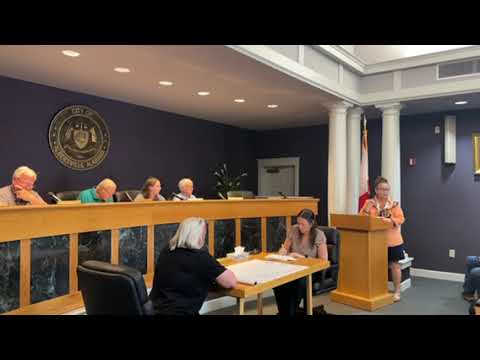
Albertville planning commission gives preliminary approval to Kadall/Thomasson subdivision, conditions engineering sign-off
Summary
The Albertville Planning Commission voted unanimously to preliminarily approve a proposed subdivision at Kadall and Thomasson roads, subject to final engineering approval; residents raised concerns about loss of agricultural land, traffic on Thomas Road, stormwater runoff and inconsistent statements about the number of homes.
The Albertville Planning Commission voted unanimously to give preliminary approval to a proposed subdivision at the corner of Kadall and Thomasson roads, with the commission conditioning final plat acceptance on meeting engineering standards.
Engineer Chris Harvey of Stratford Engineering presented the plan for the subdivision proposed by applicants Bobby Doug and Angela Harrell, saying the design includes an internal entry road off Thomasson, a forced (pressure) sewer system, and five ponds intended to control stormwater runoff. "We ended up with five ponds to control the water within that subdivision," Harvey said, adding the team produced flow calculations for 10-, 25- and 100-year storm events.
Concerned neighbors said the project would convert agricultural land to residential use and would increase traffic on the narrow Thomas Road. "Once you turn agriculture land back into residential, there's no going back," said Kelly, a nearby resident. She also warned the additional traffic would make the narrow road unsafe for current residents.
Other residents asked for details about lot sizes and the number of homes. Public statements at the meeting referenced different counts — one attendee said the developer was proposing "about 75" lots, while another later referenced 45 homes — and planning staff did not present a single final build count at the hearing. That discrepancy was noted by multiple speakers as a point needing clarification before final approvals.
A speaker identifying herself as Bonnie, representing an independent journalism group called Albert Watch, summarized zoning and infrastructure expectations: she said the property is in R1 (minimum house size discussed at the meeting was cited as 1,200 square feet for comparable lots), that sidewalks, curbs and gutters are required for subdivisions, and that the developer had described battery backup at each pumped sewer station to ensure wastewater service during power outages. "They will never be disrupted with septic service," Bonnie said, summarizing the developer's representation about backup power for the pressure sewer system.
Planning staff clarified technical issues for the public, including the distinction between sewage and stormwater: storm runoff will be routed through the proposed ponds while the sewer system is an enclosed, pumped system. Several speakers also raised concerns that creek runoff from the site eventually reaches Albertville's water pumps, a point residents said merited further review.
After discussion, the commission voted to grant preliminary approval with the explicit condition that the project meet engineering standards and final engineering sign-off before any final plat or construction approvals. No final development timeline was provided at the meeting.