Get Full Government Meeting Transcripts, Videos, & Alerts Forever!
Get email alerts on the School Performance topic
No spam. Unsubscribe anytime.
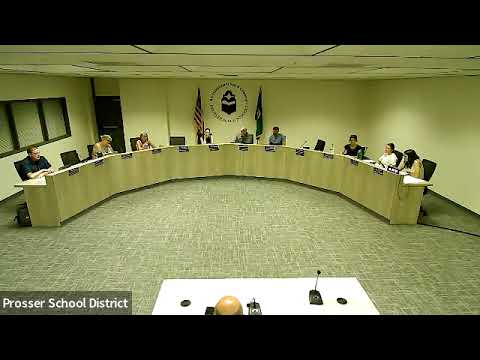
Principals cite reading gains, chronic math gaps and freshman challenges in 2025–26 SIP reviews
Summary
Principals presenting 2025–26 school improvement results to the Prosser School District board reported gains in reading and targeted interventions but flagged persistent math proficiency gaps and low freshman 'on-track' rates as priorities for 2026–27.
Principals from Prosser High, Haupt/Hazel Middle, Prosser Heights, Riverview and Strandwood told the board that PLCs, targeted interventions and new curricula are producing measurable growth in reading, but that math proficiency and long-run recovery for students who fell behind during earlier years remain district priorities.
At the high-school presentation, the principal said the graduation rate held at 87% for 2025–26 but that freshman on-track-to-graduate rates were a concern: 67% under the state definition and about 74% under a national definition used by the district’s freshman-success partners. The principal described a suite of interventions including weekly F-list monitoring, a conference tracker for teacher collaborations, a revived "Mustang Alert" staff notification system and a freshman math tutorial to recover credit.
Hazel Middle School reported baseline measures for its new "stretch-growth" targets: roughly 50.4% of targeted ELA students and 51.9% of targeted math students met the stretch-growth benchmarks this year. The principal credited PLC work and instructional coaching for gains and said the school will use SBA interim assessments and LinkIt-type unit assessments to pretest and posttest learning to guide interventions.
Elementary principals described substantial reading gains tied to curriculum alignment and PLC routines. At Prosser Heights and Riverview, leaders cited improvements on i‑Ready/ARC measures and higher WIDA exit rates in dual-language programs; Riverview said it will adopt Illustrative Math K–5 and a daily vocabulary routine to bolster comprehension and number-sense work. Strandwood—where more than half the tested students are English-language learners—reported one-year average growth slightly above a year and plans a 'triple-dip' intervention model to increase supports for 13 identified special-education students.
Board members pressed for clarity on where responsibility lies for persistent gaps and whether systemic changes—such as expanding early learning and investing in curriculum—are required. One board member asked bluntly why the district "keeps kicking the can down the road" for students who fall multiple grade levels behind; presenters pointed to curriculum upgrades, teacher training, and the need for sustained early-learning investment as multi-year strategies.
Representative data points presented to the board included: Proctor High graduation rate 87% and average daily attendance 96%; senior dual-credit participation about 68%; Hazel Middle stretch-growth rates ~50%–52%; Riverview and Heights reporting sizable gains on in-school diagnostic tools. Several principals urged continued focus on PLC work and the district’s planned assessment changes to inform instruction earlier in the year.
The principals’ presentations preceded a grouped board vote to approve all five SIPs for implementation in 2026–27. The board approved the plans as a single action.