Get Full Government Meeting Transcripts, Videos, & Alerts Forever!
Get email alerts on the Public Health Vaccines topic
No spam. Unsubscribe anytime.
Dolores County board presses to add nursing oversight and local vaccine billing to IGA
Summary
Board members discussed adding explicit nursing duties and billing authority to the intergovernmental agreement so Dolores County can credential local providers, bill Medicaid/insurers for vaccines and capture clinic revenue; staff were asked to draft specific IGA language and coordinate with neighboring county public‑health officials.
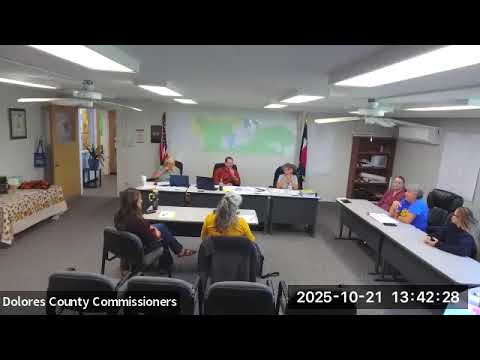
Dolores County’s Board of Health on Oct. 23 discussed strengthening the county’s intergovernmental agreement (IGA) with its partner public‑health provider to include clearer nursing responsibilities and local vaccine‑billing authority.
Board members and staff said staffing constraints and shrinking state grants make it important for the local department to be able to credential a provider, bill Medicaid (Health First Colorado) and private insurers, and retain some clinic revenue. A staff summary of an Oct. 9 clinic showed per‑vaccine Medicaid reimbursement line items and an estimated total of about $3,193 in potential revenue if those services were billed rather than processed through the partner county (transcript reads “$3,1.93,” recorded Oct. 9 clinic line items). The board discussed both the financial opportunity and the administrative work required to realize it.
Why it matters: The board framed the change as a sustainability step: with state funding for core public‑health functions declining, local billing and formalized nursing oversight would help the county maintain immunization clinics, outbreak response capacity and community partnerships with schools and social‑service providers.
Board discussion centered on concrete operational hurdles. Staff noted that Medicaid/Health First Colorado requires a credentialed provider (typically a nurse) to appear on provider rosters in order to bill; that some adult vaccines cannot be billed under VFC (Vaccines for Children) rules; and that restarting VFC locally was tied to credentialing work. A participant summarized the staffing challenge: “nursing jobs are hard to fill,” and urged including “more nursing wording in the IGA” to clarify oversight and responsibilities.
Staff committed to drafting IGA language that would specify nursing duties, describe who holds provider credentialing, and include administrative provisions (billing workflow, mileage reimbursement and account tracking with the treasurer’s office). The board requested counsel review and cross‑county conversations with Montezuma County officials before any final vote.
Operational details and constraints noted by the board included refrigeration and cold‑chain backups (existing alarmed refrigerators and portable units), on‑call notification protocols for urgent reports, and the need for clear supervisory roles for the person entering vaccine records into the state immunization system (CIS). The board emphasized three checks‑and‑balances for data entry and billing so that clinical staff (nurses) remain the authoritative source for immunization records while administrative staff support billing and reconciliation.
Next steps: Staff will prepare draft IGA revisions and follow up with Montezuma County public‑health leadership and counsel. The board did not take a final policy vote on the IGA at this meeting; members asked for language that clearly assigns nursing oversight, credentialing tasks and the billing workflow before returning for action.