Get Full Government Meeting Transcripts, Videos, & Alerts Forever!
Get email alerts on the Oil And Gas Compliance topic
No spam. Unsubscribe anytime.
BLM warns of compliance, production and plugging risks tied to Paradox/American Helium assets in Dolores County
Summary
A BLM lands manager told the Dolores County commissioners that Paradox Resources’ federal leases (now held by entities including G&G Ventures/American Helium) have unresolved royalty and operational problems, prompting shut‑ins, agency intervention and planned plugging actions; dozens of wells remain unproduced while BLM and state funds address plugging and remediation.
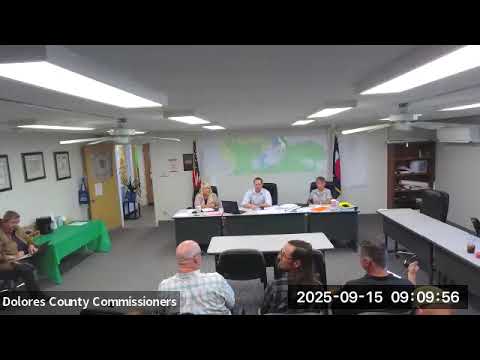
Ryan Joiner, assistant general manager for lands and minerals with the federal field office, gave a detailed briefing on oil, gas and helium activity affecting Dolores County, focusing on assets once held by Paradox Resources and now tied to entities referred to as G&G Ventures or American Helium. Joiner said the field office received a shut‑in letter from the Office of Natural Resources Revenue after Paradox failed to pay royalties; Paradox later declared bankruptcy in March 2024 and the assets were resold in May 2024.
"They went bankrupt then declared bankruptcy in March of 2024," Joiner said, describing how the new operator initially fired most regulatory staff and left only limited field personnel in place. Joiner said the Lisbon gas plant — a primary processing point for local gas — suffered a fire and explosion in December, further constraining any path to restart production.
Joiner told the board the BLM contracted third parties to secure facilities and remove liquids, spending roughly $840,000 to stabilize locations and avoid immediate environmental risk. He said the agency has issued about 31 plug notices this year and the operator applied for state funds that provide roughly $150,000 per well to plug selected wells. Joiner estimated roughly 130 wells remain across Dolores and San Miguel counties in various shut‑in or uncertain conditions.
"If at some point this year they don't follow through with these plug‑to‑produce letters, we are at the ready to issue second notices and go back to civil penalties," Joiner said, describing enforcement tools available to regulators. He noted civil penalties can accumulate rapidly under federal enforcement provisions and that multiple state and federal investigations and reviews are ongoing.
Joiner also explained the technical limits on producing helium in the region: helium occurs at low concentrations in the natural gas stream (about 3–4 percent in some units) and economic extraction depends on processing and transport capacity. He said the current combination of processing outages and the operator’s weak capitalization create uncertainty about future production or reclamation outcomes.
Commissioners asked about local employment and tax impacts. Joiner said some workers had been laid off and rehired intermittently, and that long‑term outcomes depend on whether a capitalized, compliant operator emerges or the wells become orphaned. He told the board the agency continues to coordinate with state regulators, the Office of Natural Resources Revenue, and the inspector general where investigations are active.
The presentation included an offer to provide maps and lists of affected wells to county staff; Joiner said he would send parcel‑level maps and a list of wells under plugging plans to assist county oversight and planning. The briefing concluded with county officials thanking the BLM for the update and noting the discussion’s implications for the county’s tax base and workforce.