Get Full Government Meeting Transcripts, Videos, & Alerts Forever!
Get email alerts on the Tax Policy topic
No spam. Unsubscribe anytime.
Lake County auditor outlines state tax-law changes, to return $750,000 to local taxing districts
Summary
Auditor Chris Galloway told the Board the legislature enacted multiple bills (including HB 96 and HB 479) that change how inside millage and the 20-mil floor operate, expand owner-occupancy credits over time, and will reduce some unvoted tax spikes; Galloway also announced his office will return about $750,000 from the REA fund to local taxing authorities and described the August budget-commission review process.
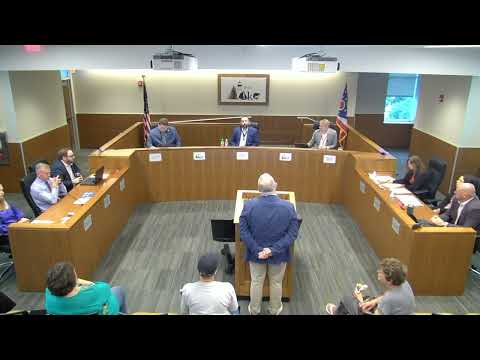
Auditor Chris Galloway briefed the Lake County Board of Commissioners on a series of state laws that change county tax relief options and county fiscal mechanics, and he announced his office will return roughly $750,000 from the REA (real-estate administration) fund to local taxing authorities.
Galloway said the bills—summarized during his remarks as House Bills 96, 124, 129, 186, 309, 335 and most recently HB 479—aim to prevent the unvoted tax “windfalls” counties saw last year by adjusting how the 20-mil floor is calculated and by indexing inside millage to inflation. “Those reforms fixed the unvoted tax increase mechanisms,” he said, and they should reduce future spikes that drove last year’s increases.
He told commissioners the legislature also expanded the owner-occupied credit in statute and intends to increase the owner-occupied (nonbusiness) credit over several years to about 15.38 percent—changes that will absorb some of the local piggyback authority commissioners had been asked to consider. Galloway described House Bill 309 as empowering budget commissions to review and, where appropriate, reduce levies judged excessive.
Galloway said his office will return approximately $750,000 from the REA fund in July to taxing authorities (schools, cities, villages, townships and county agencies) after a five-year fund analysis. “We don’t need to hold those dollars to run auditor operations,” he said, describing a recurring practice of returning unused REA dollars after sexennial valuations.
On process, Galloway said the county’s budget commission—consisting of himself, Treasurer Zorn and Prosecutor Colson—will hold public hearings in August to review non-school tax budgets, examine fund balances and revenue projections, and discuss whether levies should be adjusted. He emphasized the review is meant to examine overall fund purposes and balances, not to micromanage local line-item spending: “We’re not diving into the specifics ... we’re looking at purpose for increases in revenue,” he said.
Commissioners asked for clarifications about how the budget commission will operate and whether returning REA dollars would affect services. Galloway said the reviews and the REA return are intended to provide taxpayer relief while preserving necessary reserves for operations and unforeseen needs.
Next steps: Galloway said the budget-commission hearings will be open to the public in August and will provide a forum for taxing authorities to explain the purpose of fund balances and levies.