Get Full Government Meeting Transcripts, Videos, & Alerts Forever!
Get email alerts on the Property Reappraisal topic
No spam. Unsubscribe anytime.
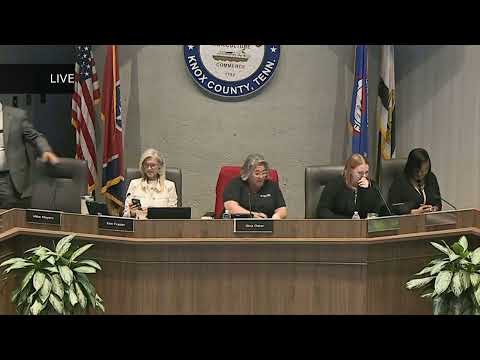
Knox County assessor details reappraisal, explains 'revenue-neutral' tax-rate adjustment
Summary
Property Assessor Phil Ballard told the County Commission the 2025 reappraisal will raise values substantially compared with 2022 baselines; the certified tax rate is expected to be adjusted to achieve revenue neutral collection, with public notices and an appeals timetable explained.
Phil Ballard, Knox County Property Assessor, briefed commissioners on the county’s reappraisal timeline and likely tax-rate effects, saying the reappraisal reflects market-value updates since the last cycle and that a revenue-neutral certified tax rate will be presented to limit countywide revenue increases.
Ballard said the county processed roughly 12,853 informal appeals and used an expanded online appeal system that reduced telephone congestion. He described the technical steps — sales-ratio checks, characteristics-based valuation adjustments, subdivision and zip-code monitoring — and emphasized that reappraisal aims to set appraised values close to market value for 2025 while the certified tax rate is adjusted to maintain overall revenue neutrality.
Using an example, Ballard explained how a home at $254,300 in 2025 that rose by 40% to roughly $355,800 could see tax bills change slightly when the new certified rate is applied; he said a roughly 60% increase in assessed value compared with the 2022 baseline would change the arithmetic but that revenue neutral adjustments will limit countywide tax increases. Ballard also explained the county’s appeals path to the Board of Equalization and then the state level and noted that public posting of 2026 values was expected in early August.
Commissioners asked about bell-curve analysis of increases, two-year versus four-year reappraisal cycles, and the distributional impacts across neighborhoods; Ballard said staff will provide more detailed geographic breakdowns and acknowledged some neighborhoods and commercial parcels can diverge from average trends.