Get Full Government Meeting Transcripts, Videos, & Alerts Forever!
Get email alerts on the Compensation Study topic
No spam. Unsubscribe anytime.
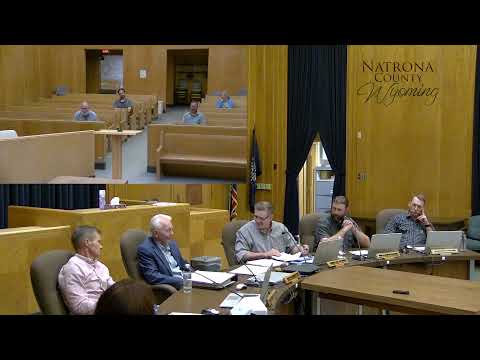
Consultants present Natrona County pay‑study; commissioners debate affordability and whether recommendations should be advisory
Summary
Baker Tilly presented a countywide classification and compensation study that recommends a consolidated pay structure; commissioners praised the rigor but questioned fiscal feasibility, employee outreach, and whether the plan should be advisory rather than binding.
Consultants from Baker Tilly presented the final report of a countywide classification and compensation study and walked commissioners through findings, methodology and implementation options.
Sarah Town, senior manager on the project, told the board the five‑phase study combined internal job evaluation and external market assessments for 106 benchmark positions and used a 75% overlap standard for quality matches. She summarized the market findings: "Overall, Natrona County was competitive at the minimum of its pay ranges, averaging about 1.6% above market. However ... the county's pay ranges at the midpoints were 6% below market ... and the pay ranges at the maximum were about 10% below market." The firm recommended consolidating more than 64 inconsistent pay grades into a predictable 26‑grade structure, developing career ladders and separate sheriff office pay grade treatment to preserve rank distinctions.
Commissioners pressed for clarity on affordability and governance. One commissioner noted concern that the market study "does not take into account our monetary stability here," and asked whether the study accounted for the county’s fiscal capacity. Staff and the consultant said the market study does not model the county’s revenue but provided implementation scenarios and a five‑year cost projection so the board can see fiscal impacts. The clerk and commissioners discussed carrying an implementation plan forward during FY27 budgeting.
Several commissioners said they wanted the plan to serve as an advisory governance tool rather than an inflexible mandate that would bind future boards, and they asked for clearer policy language on step increases, cost‑of‑living adjustments, and how elected officials outside the BOCC would be expected to align. The clerk said a policy/procedural document is being drafted that will include examples and options for how to apply steps, merit, and COLAs.
Commissioners and the sheriff’s office also emphasized turnover as a key cost factor. During the meeting, turnover figures were cited by staff and the sheriff as a motivating element; the presentation referenced a 24.4% turnover rate in the prior year.
There was no formal adoption vote; commissioners asked staff to continue refining policy language, to include implementation scenarios in budget discussions, and to consider employee outreach and communications。
The consultant will remain available to explain implementation choices and to run additional fiscal scenarios if requested by the board.