Get Full Government Meeting Transcripts, Videos, & Alerts Forever!
Get email alerts on the Land Acquisition topic
No spam. Unsubscribe anytime.
Carroll City council approves purchase of roughly 80.568 acres after debate over plan, costs and timing
Summary
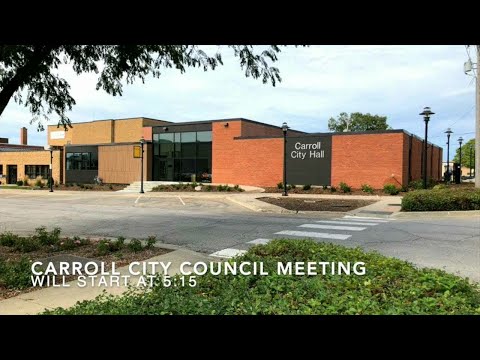
On Dec. 12, 2024 Carroll City council approved a resolution to offer to buy about 80.568 acres from Pete and John Simons (KMC Farm Limited) after extended discussion about infrastructure costs, development timelines and whether the city has a clear plan to make housing affordable.
CARROLL CITY — The Carroll City Council voted Dec. 12 to approve a resolution authorizing an offer to purchase about 80.568 acres from landowners Pete Simons and John Simons of KMC Farm Limited, after more than an hour of council discussion and public comment about financing, infrastructure and development plans.
Council member Le moved to approve the resolution and council member Carolyn seconded; the roll call recorded in the transcript shows the motion passed. The approved resolution was described in open meeting language as an offer to buy “80.568 acres for the for 2,447 from Peter Simons John Simons and KMC Farm limited,” language read aloud at the meeting. Meeting remarks and the transcript contain inconsistent numerical references to price and per-acre figures; the transcript also includes a statement that the price was “just shy of $330,000 an acre.” The council did not provide a single, reconciled total or dollar-format figure on the record during the session.
Council members and members of the public framed the purchase as a strategic step to secure land contiguous to city limits for future housing and economic development. Proponents said acquiring land now preserves options for long-term growth and tax-base expansion. "If we do not continue to build on our tax base your taxes are going to go up," a council supporter said during debate, urging a multi-decade view on development. Council members also discussed pursuing the state "Thriving Communities" designation and related tax credits; the transcript notes an application deadline in June and a designation decision in early September, making 2026 the earliest plausible year for new construction tied to those credits.
Opponents and several public commenters pressed the council for concrete development plans and clearer cost estimates before committing public funds. One resident said acting without a plan could be "catastrophic to the taxpayers" and criticized the timing of the special meeting while another asked that absent council member JJ have the opportunity to vote on the matter. The meeting record shows sustained public concern about notice and transparency.
Kimberly, identified in the meeting as the Chamber director of partnerships, urged action on housing while stressing the need for a clear plan. "I do hear and I do get asked about what is the plan for housing in Carroll and surrounding counties," she said, telling the council that employers repeatedly raise housing availability as a business retention issue. Sarah Culligan, identified as a mortgage loan officer at B Bank, asked whether the city intends the land for entry-level or workforce housing or for higher-priced homes, noting that construction loans for new homes often exceed $400,000.
Council members described two common models for moving forward: one in which developers install infrastructure and are repaid later (often via TIF or similar reimbursement mechanisms), and another in which the city installs infrastructure directly. Several council members said they prefer partner-driven infrastructure to reduce city risk, while others argued the city must be prepared to invest to reach affordable price points.
The motion approved the offer for the parcel and authorizes continued negotiation on the purchase terms; the transcript indicates the seller was to be notified the council was "on his side" as potential buyer. The record does not specify the final closing date, detailed engineering cost estimates for infrastructure, nor precise vote tallies by named council member beyond the motion and an affirmative roll call. The council adjourned immediately after the vote.
Next steps noted in the discussion include obtaining engineering estimates for infrastructure, negotiating development arrangements with potential developers, and pursuing state designation or tax-credit opportunities that council members said could affect timing and financing. Several public commenters and council members asked that the city produce a clearer plan (including timelines, anticipated infrastructure costs, and affordability objectives) to present to residents and prospective developers.
Note on figures: the transcript’s numeric references to the purchase price and per-acre amounts were inconsistent in the meeting audio/text; the article reports the numbers as they were read in the session and flags the discrepancy for public records and the city to clarify in the finalized purchase documents.