Get Full Government Meeting Transcripts, Videos, & Alerts Forever!
Get email alerts on the Municipal Budget topic
No spam. Unsubscribe anytime.
Sebago voters trim budget, cut legal line after lengthy debate over stipends and ‘Rockcraft’ litigation
Summary
Town meeting approved the municipal budget as twice amended after residents and budget committee members debated large increases to select-board stipends, town-manager and planner pay and an extra $75,000 cut from legal costs tied to an ongoing Rockcraft dispute.
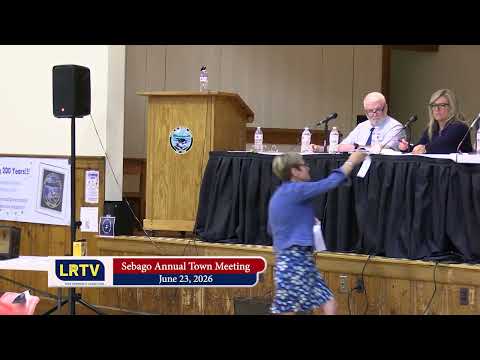
Sebago voters approved the municipal spending plan for 2026–27 after hours of debate over select-board stipends, town-manager and planner pay and the town’s litigation expenses.
The warrant originally proposed $1,350,258 to fund general government expenditures. Resident Karen Wild moved a downward amendment to reduce the total to $1,285,378 by trimming select-board stipends and several salary lines; the amendment carried after a vote. A second amendment later reduced the legal/administration line by $75,000, citing unusually high legal spending this year related to ongoing litigation; that amendment also carried. The final approved total for Article Seven was $1,210,378.
Budget-committee chair Rich Bianuli said the committee reviewed the figures presented by the town manager and that the select board had pushed for higher stipends; he noted the committee had reduced an initial larger stipend proposal before placing its recommendation before voters. Critics at the meeting argued staff pay should be prioritized — voters heard that general staff COLA increases were roughly 3.25% while select-board stipend increases were framed by some speakers as a much larger percentage hike.
The assembly also debated the town’s litigation spending. Multiple speakers, including residents who identified concerns about a local property owner known as Rockcraft, said the town had spent in excess of $150,000 on that single legal matter so far. Supporters of the town’s legal approach said pursuing enforcement sent an important regulatory signal and defended the select board’s decisions made in executive sessions and in court. The moderator repeatedly cautioned that details were limited because some matters remain in active litigation.
Several narrowly contested procedural votes punctuated the debate. When procedural motions were used to cut off debate, voters moved efficiently to decide amendment questions by raised-card voting. After the final set of amendments and a motion to end debate, Article Seven, as twice amended, carried.
The meeting record shows voters also asked for clarity about the role and costs of the code-enforcement/planner position, and several residents urged the town to focus on retaining stable town staff by funding competitive salaries. The select board and supporters of the stipend changes said the increases were intended to attract and retain volunteers and make service feasible for residents with demanding jobs or families.
The meeting left several forward steps: the select board is authorized to administer the approved budget and was reminded that additional uses of undesignated funds — and large attorney expenditures — will require public-select-board meeting approvals.