Get Full Government Meeting Transcripts, Videos, & Alerts Forever!
Get email alerts on the Essa Amendment topic
No spam. Unsubscribe anytime.
Virginia Board Approves ESSA amendment adopting value-table growth method and WIDA exit criteria
Summary
The Virginia Board of Education voted to adopt Amendment 9 to the state ESSA plan, endorsing value-table growth methodology for 2025–26 and new exit/progress criteria for the WIDA Alternate Access test; staff will submit the amendment to the U.S. Department of Education.
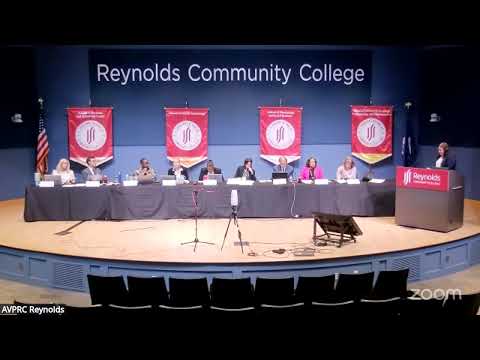
The Virginia Board of Education on Monday approved Amendment 9 to the state’s ESSA Consolidated State Plan, adopting a value-table approach for the growth indicator used in reading and mathematics for the 2025–26 accountability year and establishing an exit criterion and progress-level rules for the WIDA Alternate Access test.
Assistant Superintendent Jennings told the board the amendment reflects a year of technical work and stakeholder engagement. “We opened a 30-day public comment period and received 81 responses. Ninety-seven percent of those responses support the adoption of the value tables,” he said, summarizing the department’s outreach to educators, principals and parent groups.
Why value tables: staff said the tables provide transparency and consistency across the Standards of Learning (SOL) and Virginia Alternate Program (VAP) assessments and are more familiar to many district leaders than the state’s prior student-growth percentile or value-added approaches. Under the proposed tiered framework, advancing one performance range generally earns 1.0 point; larger moves or movement between performance levels can earn up to 1.25 points. After public feedback, staff changed the score for students who remain in a high range but show no year-to-year movement from 0.75 to 1.0 so sustained proficiency receives full credit.
Board members pressed staff on tradeoffs. Board member Mr. Robinson asked why a student who “stays” at a high range can receive the same growth credit as a student who moves from a low to a mid range, warning that an improperly designed growth measure could disadvantage schools serving students furthest from opportunity. Deputy and technical staff explained the value tables are a public reporting device that summarize an underlying continuous growth scale; they also noted psychometric concerns about subdividing ranges too finely because of measurement error.
WIDA Alternate Access rules: the amendment also sets exit and progress criteria for the WIDA Alternate Access assessment, a newer English-language proficiency assessment taken by students with severe cognitive disabilities. Jennings said roughly 3,200 students took the Alternate Access assessment in 2024–25 (about 2% of the state’s English learners). A departmental committee recommended a proficiency exit at level 4; using 2024–25 data, staff said 14% of the cohort would have exited under level 4 versus 26% under level 3. “The updated exit criteria acknowledges that students who participate in these assessments are working towards language development and are aligned to alternate achievement standards,” Jennings said.
Next steps and federal submission: staff said the board’s approval will be submitted to the U.S. Department of Education for review and, if approved federally, the department will publish the updated plan and begin using it for 2025–26 accountability reporting.
Vote: A motion to approve the described revisions carried on a roll call in which several members verbally recorded “Aye” and the chair announced approval. The department will publish the adopted plan and proceed with federal submission.
What remains unsettled: board members who questioned the design asked the department to model the cut-score effects and to continue refining reporting so parents and educators see the continuous growth behind the summarized tables. Staff agreed to continue technical reviews and return with additional analyses.
Approval of Amendment 9 represents the department’s next step to align assessments, accountability reporting and English-learner progress measures ahead of the 2025–26 school year.