Get Full Government Meeting Transcripts, Videos, & Alerts Forever!
Get email alerts on the Zoning Variance topic
No spam. Unsubscribe anytime.
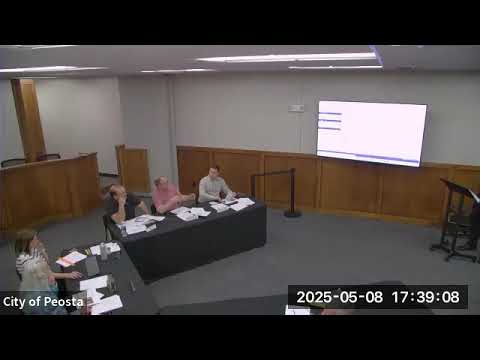
Peosta adjustment board denies homeowner’s request for fence variance at 8294 Calbridge Street
Summary
The Peosta Adjustment Board declined a homeowner’s request to place a six-foot privacy fence closer to the street than zoning setbacks allow, citing R1 setback rules and intersection visibility concerns after a lengthy public hearing and applicant presentation.
The Peosta Adjustment Board voted on Monday to deny a variance request from applicant Jared Barl to place a six-foot privacy fence closer to the street at 8294 Calbridge Street than zoning setbacks permit.
Barl told the board he sought an extra 10 feet of yard space — roughly 610 square feet — to provide a safer, private area for his two Siberian huskies and his young children. “It’s about safety not only for my family but also… having a safe, playable space in my backyard,” Barl said, adding he believed his proposed fence would not further obstruct sight lines at the corner and that inconsistent stop-line placement reduced motorists’ visibility.
Board members questioned that assessment and emphasized the text of the city’s zoning rules for R1 residential lots. Members repeatedly cited a 20-foot setback from the property line that applies to structures, and they distinguished that rule from the 25–30-foot visibility-triangle language that restricts plantings or structures within a corner sight triangle. Board members also raised operational concerns: they said snowplows and piled snow at the curb could reduce sight distance or damage a fence placed nearer the street.
Members described the board’s role as an adjustment body that hears variance requests but does not change the underlying ordinance. Several members said that, because there was nothing physically obstructing the applicant’s proposed fenced area (for example, utility lines or fixed infrastructure), the request read more like a desire for additional yard space than a traditional variance justified by a site constraint.
After discussion, the board moved and voted to not approve the variance request. The vote was recorded by voice and the board chair entered the decision as not approved.
The board closed the public hearing and adjourned with no further action on the application. If the applicant seeks further review, options were not specified during the meeting.