Get Full Government Meeting Transcripts, Videos, & Alerts Forever!
Get email alerts on the Civil Rights topic
No spam. Unsubscribe anytime.
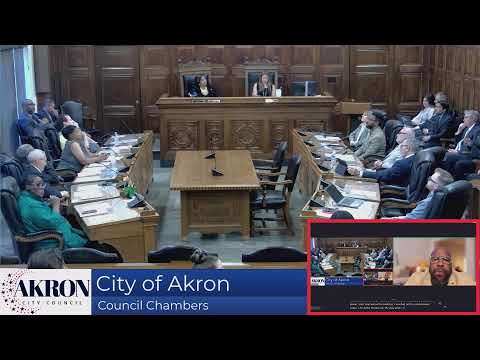
Akron City Council unanimously adopts resolution opposing Ohio House Bill 249
Summary
Akron City Council voted 13–0 to adopt a resolution opposing House Bill 249, which sponsors and council members characterized as a de facto drag ban, and declared an emergency to expedite the measure.
Akron City Council voted unanimously to adopt a resolution opposing Ohio House Bill 249 and declared the measure an emergency to expedite its effect. The resolution, offered by Mayor Malek and Councilperson Wilson, passed 13 to 0 after the council suspended the rules to take it up at the meeting.
Mayor Malek told the council the city must push back against bills that "promote hatred, bigotry, [and] fear of our LGBTQ plus community," saying they are often "not grounded in any coherent understanding of the First Amendment." Councilperson Wilson described House Bill 249 as "essentially a drag ban" and said she believed it infringes on free-expression rights; she added that Akron's state representatives Ronica Sims and Derek Hall had voted against the bill in the Ohio House.
Councilwoman Amobian and other members added that Akron is a welcoming city with a long history of gender-bending and drag performance, and urged the city to stand publicly for the dignity and safety of LGBTQ+ residents. The council voted to suspend the rules, adopt the resolution and declare an emergency so the statement could be entered into the city record without delay.
The resolution is a formal statement of municipal opposition to the state bill; council members said the vote reflects local values and provides a public record of the city’s stance. No additional legislative penalties or directives were included in the resolution; the measure is symbolic opposition to state-level legislation. The council took the vote at the meeting and the presiding officer announced the record of passage.