Get Full Government Meeting Transcripts, Videos, & Alerts Forever!
Get email alerts on the Dredging Pond Restoration topic
No spam. Unsubscribe anytime.
Commission approves limited dredging at Volunteer Fire Company pond, requires cattail regrowth monitoring and replanting
Summary
Brookfield’s Inland Wetlands Commission approved a permit to dredge the Brookfield Volunteer Fire Company pond at 100 Pocono Road with a 12-inch excavation limit and a one-year cattail regrowth review; if regrowth is under 1,000 sq ft the town must supply and plant two dozen bare-root broadleaf cattails or seed per USDA NRCS guidance.
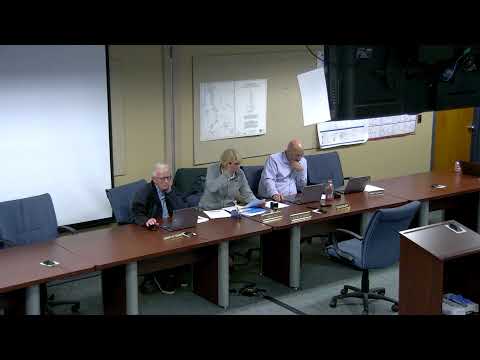
The Brookfield Inland Wetlands Commission voted unanimously June 22 to approve a dredging project at the Brookfield Volunteer Fire Company pond at 100 Pocono Road, adding conditions intended to protect and restore existing broadleaf cattail habitat. Sharon Cox, the commission chair, moved to approve W-26-32 with a stipulation that excavation not exceed 12 inches below the existing pond bottom and that the town review cattail regrowth 12 months after dredging is complete.
Cox said the approval should "allow for the continuation of the existing cattails in the pond" and included a backstop: "if less than 1,000 square feet of cattails exist, the town will purchase two dozen bare root broadleaf cattails or seeds and plant in that pond," language Cox read into the motion that cited the United States Department of Agriculture Natural Resources Conservation Service (USDA NRCS) plant guide for broadleaf cattails as the restoration standard. Bob Hudman seconded the motion and the commissioners voted unanimously to carry it.
Commission discussion focused on limiting depth and timing of dredging to avoid exposing cattail roots in hot months and on practical monitoring and enforcement. Commissioners noted the application described excavation of approximately 6–12 inches of accumulated sediment and debris; the motion codified a firm 12-inch limit to preserve existing plants and allow natural regrowth. Cox said the commission wanted a simple, enforceable follow-up: a one-year site review and replanting only if the target area (about 1,000 square feet) had not reestablished.
Commissioners debated monitoring mechanics and contingencies if contractors needed to excavate slightly deeper in the field, acknowledging contractors may not always measure to exact stake marks while operating equipment. Rather than require onsite stakes, members settled on the one-year vegetation check and the replanting requirement as an administrable remedy.
The approval references a construction sequence and an existing-conditions plan received May 1, 2026, and the motion includes the commission’s usual stipulations. The permit record notes the dredging was described in the project documents as excavating approximately 6–12 inches; the commission’s action caps the excavation at 12 inches and requires town responsibility for restoration if cattail regrowth is insufficient.
Next steps: staff will note the condition in the permit, schedule the one-year review for vegetation regrowth, and notify the town that the planting requirement applies if the cattail target is not met.