Get Full Government Meeting Transcripts, Videos, & Alerts Forever!
Get email alerts on the Energy Storage topic
No spam. Unsubscribe anytime.
Flat Iron Energy outlines 140 MW battery plan for New Milford; residents raise safety and zoning concerns
Summary
Flat Iron Energy presented plans for a 140 MW / 560 MWh battery storage facility on Tuck Ridge Road and Timothy Lane in New Milford, citing grid reliability and local tax benefits. Residents pressed the developer on fire safety, floodplain/aquifer risk, noise, decommissioning and zoning; Flat Iron pledged more studies, written answers and a host community agreement.
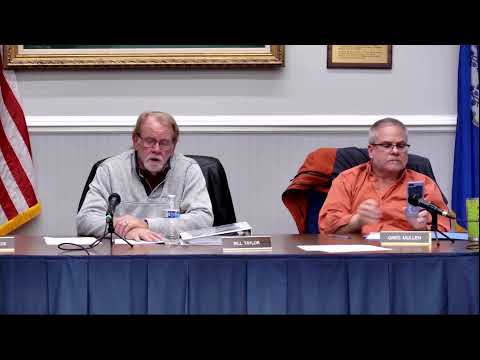
Flat Iron Energy told the New Milford Zoning Commission on Nov. 1 that it proposes a 140-megawatt, four-hour (560-megawatt-hour) battery energy storage facility on parcels near Tuck Ridge Road and Timothy Lane and is now in municipal consultation as it advances a state siting application.
“This is a 140 megawatt 4-hour battery energy storage system,” Flat Iron development director Charlie McGovern said during the informational meeting, laying out the company’s timeline and site plan and noting an executed Large Generator Interconnection Agreement (LGIA) with Eversource. McGovern said the developable footprint for the project would be roughly 10 acres within an approximately 100-acre optioned parcel, and that the project would interconnect at the 115 kV voltage class.
Why it matters: Flat Iron framed the project as a tool to increase local grid resiliency, enable more renewables and avoid costly transmission upgrades that can be passed to ratepayers. The company emphasized temporary construction jobs and potential host-community funding as local benefits, but residents and the commission pressed the developer repeatedly on public-safety, environmental and process questions.
Safety, fire response and chemistry
Flat Iron’s safety lead, Chris Groves, described a layered safety approach that includes UL-listed equipment, compliance with NFPA 855 and UL 9540-related guidance, site-specific emergency plans and training for the local fire department. “We take a layered approach,” Groves said, describing remote 24/7 monitoring and a subject-matter-expert response team based in Connecticut who Flat Iron says can reach the site within roughly an hour.
Groves said the company’s protocol for a thermal event is typically to stage outside the gate and work with the developer’s SMEs rather than immediately send firefighters into battery containers. He said initial plume assessments indicate emissions would dissipate quickly and typically would not travel beyond the property boundary, and that shelter-in-place—not immediate neighborhood evacuation—would be the usual public-safety recommendation unless responders determine otherwise.
Residents, however, raised repeated concerns about the potential for thermal-runaway fires, airborne emissions, long-term contamination and the capacity of an all-volunteer local fire department to respond. Several speakers asked whether the developer would commit to funding additional protective gear, monitoring equipment or third-party emergency-response support for the department; Flat Iron said such commitments can be captured in a host community agreement.
Floodplain, wetlands and aquifer questions
Engineers for the project (VHB) said the battery rows and substation structures would be sited above the FEMA-designated flood elevation (the presentation cited batteries roughly 4 feet above the flood plane and substations about 3 feet above). Flat Iron said it is working with CT DEEP programs on stormwater, wildlife and aquifer-protection best practices and that any required mitigation or permit conditions would be set during state review.
Several residents emphasized that the site sits near wetlands and an aquifer-protection area and urged independent, peer-reviewed flood and plume modeling; others said historic flood events and the local topography (valley and ridgelines) increase risk. Flat Iron said it will provide the drainage plan and additional studies upon request and that the project design attempts to avoid mapped wetland areas and keep setbacks from them.
Noise, visual screening and neighborhood impacts
Neighbors asked for concrete, measured sound data for both the site boundary and nearby houses. Flat Iron cited CT DEEP noise guidance and gave initial thresholds (company representatives discussed receptor/emitter classes and said daytime and nighttime thresholds would be respected), but said a final noise study and OEM (original equipment manufacturer) settings will determine exact duty cycles and fan noise mitigation. The developer promised written noise modeling and examples from other sites where possible.
Zoning, permitting and process
Multiple residents asked how the town’s R40 zoning interacts with the state review. McGovern and VHB explained that Connecticut’s Siting Council (and ultimately PURA for certain approvals) can authorize projects that conflict with local zoning and that Flat Iron is pursuing the state certificate process. McGovern said the company had submitted a draft application to town staff and the mayor’s office and that the municipal consultation window opened Oct. 15, 2025 (a statutory minimum 60-day window), with a Siting Council docket and a roughly six-month state review expected once the application is filed.
Decommissioning and lifecycle
Flat Iron said the typical project life would be about 20–25 years and that a decommissioning bond and plan would be put in place; the company also described augmentation plans for replacing degraded battery units over the facility lifecycle. Residents asked for tighter detail on decommissioning cost assumptions, salvage value of LFP batteries and how the town would avoid long-term liability; Flat Iron said it would provide a written decommissioning framework and suggested terms could be captured in a host community agreement.
Public comments and developer commitments
The public comment period featured many residents calling for independent impact studies, extended municipal consultation, stronger commitments to local emergency capacity, clearer noise and plume modeling, and more detailed proof of local benefit. Tom Capsak, a resident, told the commission the proposal was “insulting to the community” and urged the town to demand fuller documentation; other speakers voiced worries about property values, wildlife (box turtles were mentioned), and the cumulative effect of future development and climate-driven flood risk.
In response, Aaron Baker (vice president, Flat Iron) and other Flat Iron representatives said the company will provide written answers to the commission’s questions, make the project website and project documents available, and negotiate a host community agreement that can include funding for third-party reviews, fire-department equipment and community grants. The developer also said it would provide existing independent reports and OEM data where available and that it had conducted an interconnection study with Eversource and executed an LGIA.
What happens next
Flat Iron indicated an intent to file a Siting Council application in early 2026 after completing municipal consultation; the town said it will compile questions from this meeting, post them and Flat Iron’s written responses on the zoning website, and send a letter to the Connecticut Siting Council and PURA summarizing local concerns. The Zoning Commission moved, seconded and closed the meeting.
Reporting note: quotes and attributions in this story come from the Nov. 1 informational meeting transcript and the company’s speakers listed at the meeting. The HCA, noise studies, flood/drainage plans and written interconnection details provided by Flat Iron will be the primary documents to watch for further detail.