Get Full Government Meeting Transcripts, Videos, & Alerts Forever!
Get email alerts on the Energy Storage topic
No spam. Unsubscribe anytime.
New Milford residents press for public hearing on Flat Iron 'TreeBard' battery proposal; mayor outlines state review process
Summary
Dozens of residents urged the council to seek a wetlands hearing and independent reviews after Flat Iron’s proposed TreeBard battery storage site was disclosed; Mayor Bass said the Connecticut Siting Council and PURA, not the town, will decide any application and promised a January workshop to coordinate municipal comments.
Dozens of New Milford residents used the public comment period to press the town council to seek a formal public hearing and independent technical review of a proposed 1.9-megawatt battery energy storage facility presented by Flat Iron (branded in the record variously as “TreeBard”/“Treebeard”). Residents voiced concerns about the project’s proximity to residential neighborhoods, an aquifer and the West Aspetuck/Housatonic river system, and about the capacity of local volunteer fire departments to respond to prolonged lithium-ion thermal runaway incidents.
Why it matters: Speakers said potential environmental and public‑safety consequences—thermal‑runaway fires, toxic smoke, contaminated firefighting runoff, noise and lighting, and long‑term soil and water contamination—warrant a formal record before state reviewers. Multiple residents and civic groups requested that the mayor ask the Inland Wetlands and Aquifer Protection Commission to schedule a public hearing under Conn. Gen. Stat. §22a‑32 so neighbors and experts can testify on the record.
Several speakers read or summarized letters and petitions. “We must protect our water. It is our greatest resource,” one resident said, asking the council to seek a wetlands hearing and to ensure the town’s comments are built on independent science rather than press coverage. Another resident representing Quiet Rain Farm warned that animals could suffer irreversible lung damage from toxic fumes in the event of a battery fire.
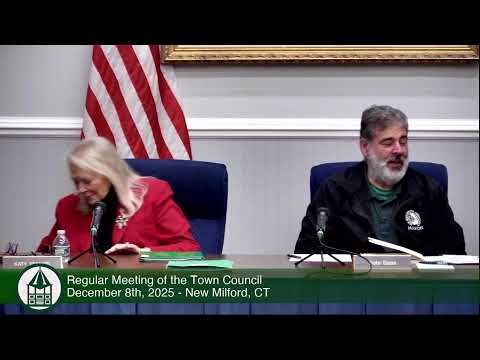
Mayor Bass addressed jurisdictional limits and next steps, saying the town’s authority is limited to municipal consultation and that the Connecticut Siting Council, with PURA oversight, would make the ultimate permit decision should an application be filed. The mayor said Flat Iron has not yet filed a Siting Council application, that the company has indicated it would fund third‑party technical reviews requested by the town, and that the council will schedule a January workshop to gather boards, commissions and staff so the municipality can present coordinated, evidence‑based comments to the Siting Council.
What residents asked for: Multiple speakers urged the council to (a) seek a wetlands/aquifer public hearing; (b) require or arrange independent environmental and fire‑safety reviews (paid for by the applicant when possible); and (c) explore alternative, less sensitive sites (for example, locations with existing industrial or non‑aquifer land uses).
Claims and company record: Speakers cited recent international incidents at other battery storage sites and said Flat Iron’s operating claims are largely self‑reported; they asked for independent audits and full disclosure of battery chemistry, fire‑suppression systems and potential hazardous materials. The town read letters from state legislators that said they are following constituent concerns and have engaged state agencies to monitor the proposal.
Next steps: The mayor said Flat Iron plans an open house in early January outside the statutory 60‑day municipal consultation window and reiterated that the company indicated it intends to file a Siting Council application in the coming months; the town will hold a January 12 meeting/workshop to collect technical questions, coordinate municipal comments, and invite boards and commissions to participate.
The council did not take a formal vote on a binding directive to the mayor at the meeting excerpt provided; the record shows broad public opposition and a pledge to coordinate municipal review and third‑party studies before a Siting Council filing.