Get Full Government Meeting Transcripts, Videos, & Alerts Forever!
Get email alerts on the Zoning Group Home topic
No spam. Unsubscribe anytime.
NGHC Inc. petitions DuPage County Zoning Board for variances to open group home, greenhouse and large ADU
Summary
NGHC Inc., represented by Dave Nelson, asked the DuPage County Zoning Board of Appeals on June 25 for conditional-use approval and ten variances to convert a Neighborville house into a group home with a vocational greenhouse and a 3,850-square-foot detached accessory dwelling unit to house staff or family; the board set a recommendation meeting for July 9.
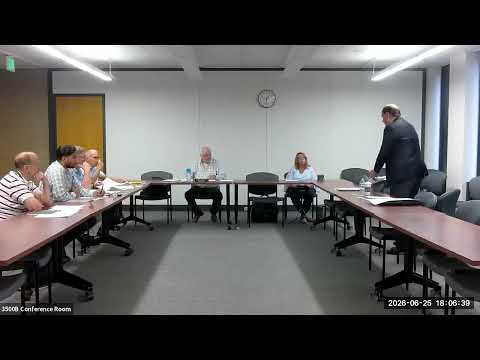
At a June 25 DuPage County Zoning Board of Appeals hearing, petitioner NGHC Inc. (represented by Dave Nelson) asked the board for conditional-use approval and ten variances to operate a community-integrated living arrangement for disabled adults, build a vocational greenhouse with wholesale sales, and construct a detached accessory dwelling unit to house staff or family.
Nelson, who said he is the fee holder of the property and president of NGHC Inc., told the board his proposal responds to three needs for disabled adults: housing, staffing and employment. “What we’re asking for…the three big issues … for disabled adults is first of all housing, second of all staffing of that housing and third is jobs,” Nelson said during his presentation.
The petitioner described a planned development on a 1.14-acre parcel in unincorporated DuPage County (address given as Neighborville, Illinois). The requests included: a conditional use for a group home with an accessory vocational greenhouse and accessory retail/wholesale crop sales; increasing permitted accessory-building area from code limits to roughly 7,000 square feet; allowing a detached ADU of about 3,850 square feet; permitting total accessory area to exceed the principal building footprint; increasing total permitted occupants from five to 12 (allocating eight in the principal house and four in the ADU); waiving the owner-occupant ADU requirement where the property would be owned by a 501(c)(3); allowing the ADU’s exterior to read as a small house rather than an accessory shed; and modest height variances for the greenhouse and ADU.
Nelson explained that state rules for community-integrated living arrangements (referred to in the record as “SILA”) require separate living and service spaces for ADU occupants and the primary residence, which, he said, drives the larger ADU footprint. He also said the site is lower in elevation than an adjacent 90-unit townhome development across the street and argued the greenhouse and ADU would be largely unseen from the road.
Nelson said project preparation is already underway: building permits and many state inspections required for licensing have been completed, geotechnical testing and septic relocation work have been commissioned, and a solar system has been installed. He said Little Friends will operate the facility under a long-term lease and that title is expected to be held by a 501(c)(3) operating arrangement in the future.
During board questions, Nelson confirmed live-in overnight staff coverage, described weekday shift patterns and said additional visiting staff would provide maintenance and day-to-day support. On ownership, he said the property currently is held by him and his wife and that a 501(c)(3) would assume long-term control under a lease contract with an operating company.
The board took a procedural vote earlier in the meeting to permit a member to participate remotely; that motion, made by Mr. Moran and seconded by Mr. Schultz, passed when members indicated assent. The hearing record for the NGHC Inc. matter was closed at the end of Nelson’s presentation, and the board scheduled a recommendation meeting for July 9, 2026, at 5:30 p.m.
What happens next: The matter is set for a recommendation session where the board will deliberate and forward its recommendation; no final zoning decision was announced at the June 25 hearing.