Get Full Government Meeting Transcripts, Videos, & Alerts Forever!
Get email alerts on the Governance And Policy topic
No spam. Unsubscribe anytime.
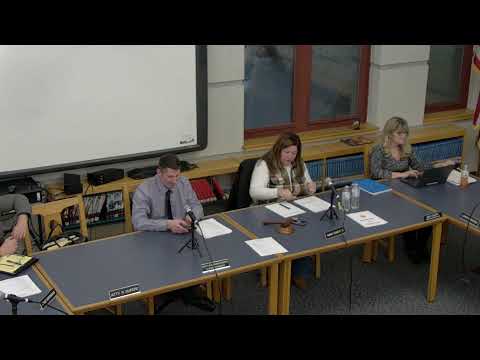
Committee considers broader public participation policy changes; moves into executive session on negotiations
Summary
The committee advanced a first reading of changes to public‑participation rules (expanding who may speak to include district staff and students who work/attend in the district even if they live outside Athol or Royalston) and later voted to enter executive session under MGL for collective bargaining and superintendent negotiations.
The Athol‑Royalston School Committee conducted a first reading of revisions to its public participation policy and later voted to enter executive session to conduct negotiations strategy.
Policy subcommittee members presented proposed amendments to public participation rules intended to allow district staff, students and parents who work or attend within the district to speak during public input even if they live outside Athol or Royalston. The proposed changes also add procedural options for extending overall public‑input time or individual speaker time by a simple majority vote, and clarify that anonymous submissions would not be read because the committee cannot validate eligibility.
The subcommittee noted the change was intended to broaden legitimate participation rather than constrain it. As a first read, the item was informational; members were invited to send concerns back to the subcommittee. Two other policies—EHB (records retention) and EHAA (district security relating to technology)—were on their third reading and were noted as ready for motion and vote at a subsequent meeting.
Late in the meeting the chair moved the committee into executive session pursuant to MGL c.21A to discuss strategy related to collective bargaining and preparation for negotiations with non‑union personnel (the superintendent). The chair requested a roll call vote; the committee entered executive session and did not return to public session on the record.
Next steps: the public participation policy will return to the subcommittee and then the committee for further consideration; the committee will conduct negotiations in executive session as allowed by state law.